
Compensation Management Software for Biotech and Life Sciences
Life sciences compensation runs on Radford data, R&D job families, clinical operations grade structures, and OFCCP documentation. CompBldr is built for exactly this. See how our automated matching engine coordinates specialized rewards programs from pre-commercial research labs to global product launches.
.svg)
What Is Radford-Anchored Compensation Governance for Biotech?
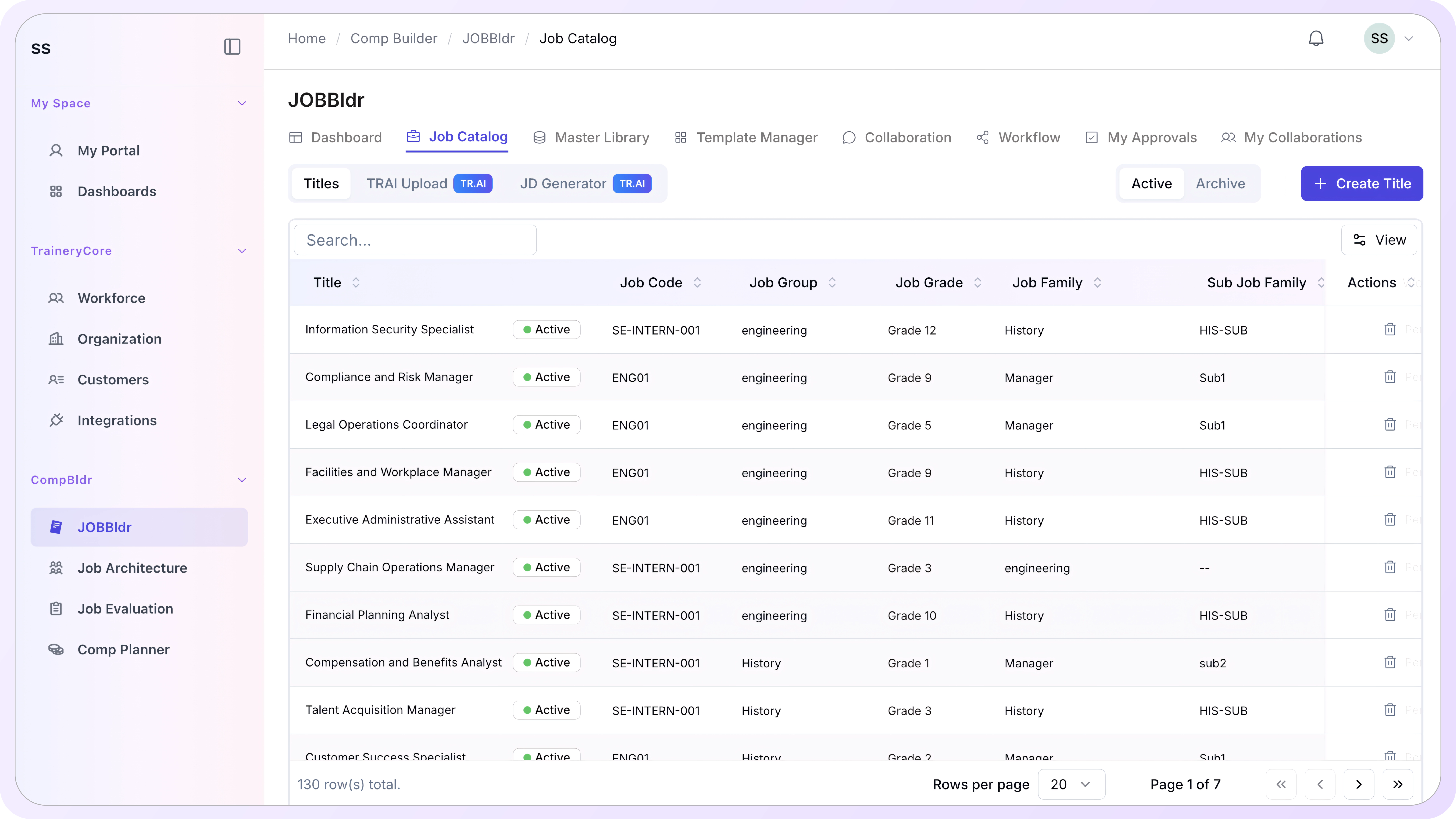
Radford-anchored compensation governance for biotech means every R&D and clinical role is matched to Radford Life Sciences survey positions using job architecture attributes rather than title strings, producing market reference points that reflect the specialized expertise premium the life sciences talent market actually pays. The governance layer adds JESAP evaluation documentation for each grade placement, OFCCP-ready audit trail for federal-contracted organizations, and version-controlled salary band history for every role cluster from pre-commercial through commercial stage.
What Makes Life Sciences Compensation Structurally Different
Generic software systems miscalculate biotech pay because they ignore clinical monitored protocols, GxP standards, and FDA approval cycles.
R&D roles require Radford Life Sciences-specific data, not broad-market surveys
Radford (Aon) publishes a dedicated Life Sciences survey covering pharmaceutical, biotechnology, and medical device companies. For R&D roles (Research Associate, Scientist, Senior Scientist, Principal Scientist, Research Director), this survey provides compensation data from organizations in the same talent market with comparable role scope and expertise requirements. A broad-market survey composite for 'Senior Scientist' averages across organizations in very different industries where the scientific expertise requirements, market demand, and compensation levels differ significantly from life sciences. CompBldr uses Radford Life Sciences as the primary source for all R&D and clinical job families.
Clinical operations spans exempt and non-exempt populations with different governance needs
Clinical operations in a biotech or pharma organization spans roles from clinical research coordinators (potentially hourly non-exempt) through clinical project managers and VP Clinical Development (salaried exempt). A life sciences job architecture must accommodate both pay expressions within the clinical family, connecting FLSA exemption status to grade placement and applying the appropriate survey data for each level. CompBldr tracks FLSA status at the role level as part of the job architecture, ensuring that grade placements and salary band expressions are consistent with each role's exemption classification.
Regulatory affairs and quality assurance carry market premiums that generic surveys understate
Regulatory affairs and quality assurance professionals in life sciences command compensation premiums relative to equivalent functional scope roles in other industries, reflecting the specialized knowledge of FDA and EMA regulatory frameworks, ICH guidelines, and GxP compliance requirements. A generic operations or legal survey composite significantly understates the market rate for a Senior Regulatory Affairs Manager or Director of Quality Systems at a biotech. Radford Life Sciences captures this premium accurately because the survey respondents are life sciences organizations paying the same market premium.
Pre-commercial and commercial stage companies benchmark against different peer sets
A pre-commercial biotech competing for a Director of Clinical Development is benchmarking against other venture-backed biotechs and large pharma companies, using equity as a significant component of the total compensation value proposition. A commercial-stage company with a marketed product competes across a broader labor market that includes non-life-sciences employers for commercial function roles. CompBldr supports stage-appropriate benchmarking by configuring different survey sources and blend weights for R&D versus commercial function families, and allows those configurations to evolve as the organization advances through development stages.
How CompBldr Is Built for Life Sciences Organizations
Biotech and pharma rewards require a precise governance layout. CompBldr delivers localized automated compliance and Radford mapping from day one.
.svg)
Radford Life Sciences survey matching for R&D and clinical roles
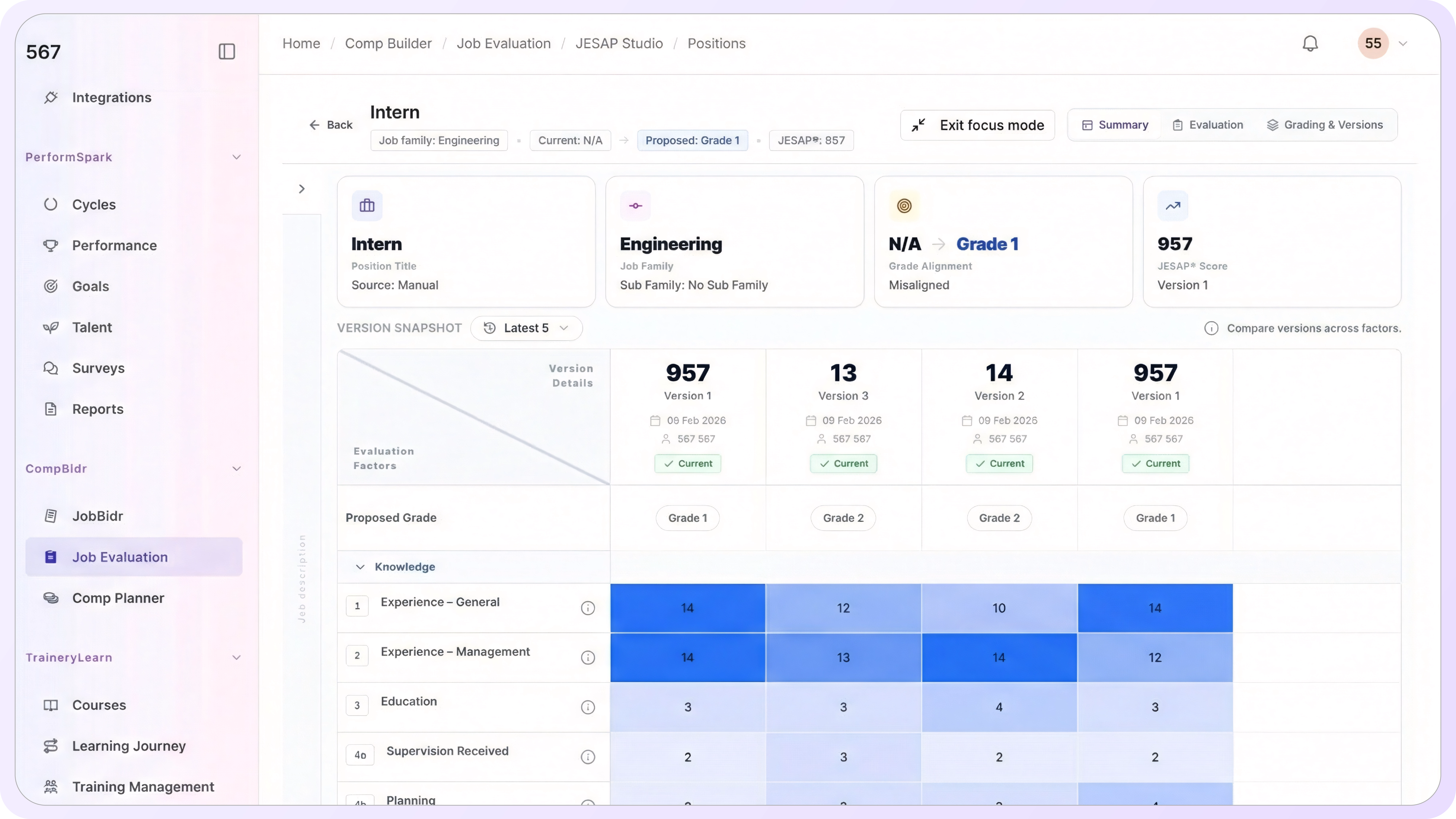
CompBldr uses Radford Life Sciences data as the primary source for R&D, clinical operations, regulatory affairs, and quality assurance job families. Architecture-based matching uses JESAP evaluation scores from the Knowledge and Complexity dimensions as the primary matching criteria for scientific roles, identifying the Radford survey position whose scope most closely reflects the evaluated role attributes rather than the role's title. This produces market anchors that account for the variation in scientific seniority and expertise across organizations using the same title.
R&D job families designed for scientific career progression
CompBldr's R&D job family structures reflect the actual career progression of scientific roles in life sciences: Research Associate through Scientist, Senior Scientist, Principal Scientist, Distinguished Scientist, and Fellow, with level criteria specific to the scientific domain rather than generic professional-level descriptions. Clinical Operations families cover CRA, CRC, Clinical PM, Senior Clinical PM, Director through VP levels, with level criteria reflecting regulatory experience, protocol design authority, and organizational impact on development timelines.
OFCCP compliance documentation for federal-contracted life sciences employers
CompBldr uses Radford Life Sciences data as the primary source for R&D, cliLife sciences organizations with 50 or more employees and $50,000 or more in federal contracts (NIH grants, BARDA contracts, VA contracts, DoD research contracts) are subject to OFCCP regulations requiring Affirmative Action Programs including compensation analysis. CompBldr supports the demographic and role-level data structure required for AAP preparation and maintains the compensation documentation standard that OFCCP compliance requires. The audit trail of every compensation decision is permanently maintained and exportable for OFCCP examination documentation.nical operations, regulatory affairs, and quality assurance job families. Architecture-based matching uses JESAP evaluation scores from the Knowledge and Complexity dimensions as the primary matching criteria for scientific roles, identifying the Radford survey position whose scope most closely reflects the evaluated role attributes rather than the role's title. This produces market anchors that account for the variation in scientific seniority and expertise across organizations using the same title.
The Pre-Commercial to Commercial Transition in CompBldr
Transitioning from pipeline R&D to marketed commercialization reshapes your compensation blueprint.
CompBldr models this evolution without breaking your structural history.
How job architecture expands when a biotech becomes commercial
When a biotech advances to commercial stage following first product approval, the job architecture must expand to include Sales, Marketing, Market Access, Medical Affairs, and Commercial Operations families that were not present in the pre-commercial structure. CompBldr supports this expansion by adding new job families with appropriate survey matching and salary bands without disrupting the existing R&D, clinical, and corporate infrastructure already in place. The transition is staged: commercial families are configured and validated before commercial headcount begins hiring, so the first commercial hires enter a governed compensation structure from day one.
How benchmarking sources shift for commercial function families
Pre-commercial biotech compensation for corporate and commercial functions is benchmarked against other venture-backed and small-cap pharma organizations using Radford and Mercer data filtered by life sciences company size. Post-commercialization, commercial functions (Sales, Marketing, Market Access) compete for talent against a broader market including non-life-sciences companies, and benchmarking shifts toward broader Mercer and WTW cross-industry data for those families while R&D and clinical families continue to use Radford Life Sciences as the primary source.
Regulatory-Grade Documentation for Life Sciences
Compensation choices carry legal implications when operating under BARDA research grants or NIH allocations. Our backend keeps rigorous, locked records of salary band alterations.
What FDA and OFCCP-regulated environments expect from compensation records
Life sciences organizations operating in FDA-regulated environments are accustomed to documentation standards requiring traceability of decisions to the data and methodology that produced them. This standard extends to compensation decisions in industries where regulatory scrutiny of business practices is routine. Every compensation action in CompBldr carries a documented rationale: the evaluation score, the survey sources, the positioning strategy, the approver, and the timestamp. This documentation is the compensation governance equivalent of a batch record.
How CompBldr audit trail meets life sciences documentation standards
Pre-commercial biotech compensation for corporate and commercial functions is benchmarked against other venture-backed and small-cap pharma organizations using Radford and Mercer data filtered by life sciences company size. Post-commercialization, commercial functions (Sales, Marketing, Market Access) compete for talent against a broader market including non-life-sciences companies, and benchmarking shifts toward broader Mercer and WTW cross-industry data for those families while R&D and clinical families continue to use Radford Life Sciences as the primary source.
What a Biotech Company Gains From CompBldr in 90 Days
Establishing Radford mapping, scientific role structures, and compliant data pools takes months of consultant labor.
CompBldr automates this alignment in 12 weeks.
Scientific Calibration & Career Ladders
Establish primary R&D, clinical operations, regulatory, and corporate job families with scientifically calibrated level criteria.
Radford Matching & Band Modeling
Complete Radford Life Sciences survey matching for all scientific and clinical role clusters. Build salary bands reflecting specialized premiums.
OFCCP Audit Trail Ready & Investor Prep
Produce the OFCCP compensation documentation infrastructure before your next examination cycle. Complete professional due diligence folders.
Frequently Asked Questions

The Radford Life Sciences Survey, published by Aon, is the most widely used compensation survey specifically for pharmaceutical, biotechnology, and medical device companies. It provides compensation data for scientific, clinical, regulatory, and commercial roles from life sciences organizations of all stages and sizes. For R&D and clinical roles, Radford Life Sciences data is materially more reliable than broad-market surveys because it captures the specialized expertise premium that life sciences talent markets pay and that non-life-sciences survey composites significantly understate.

For emerging scientific roles without exact Radford equivalents, CompBldr uses adjacent role blending: identify two to three survey positions that partially describe the role's scope and create a weighted blend of their market data, documented with the selection rationale. Alternatively, use a benchmark family match with a scope-based differential applied based on the JESAP evaluation score. Both approaches produce documented, auditable market anchors rather than leaving new or emerging roles unpriced or priced by judgment.
Biotech and pharma companies with 50 or more employees and $50,000 or more in federal contracts (NIH research grants, BARDA contracts, VA contracts, DoD research contracts) are subject to OFCCP regulations requiring an annual Affirmative Action Program including a compensation analysis. The compensation analysis must evaluate whether pay differences between demographic groups in comparable roles can be explained by legitimate factors. OFCCP examinations in the life sciences sector have increased as the agency prioritizes high-profile industries.
Pre-commercial companies use equity-heavy total compensation to compete against larger pharma for scientific and clinical talent, with base salaries benchmarked against comparable-stage biotechs rather than large pharma. At commercial stage, commercial function roles (Sales, Market Access, Medical Affairs) compete against a broader talent market including non-life-sciences employers, and benchmarking for those families shifts to broader market data. R&D and clinical families continue to use Radford Life Sciences as the primary source. CompBldr supports this evolution by allowing survey configurations to change by job family as the competitive landscape shifts.
Yes. CompBldr supports geographic pay differentials at the country or region level, allowing the same job architecture and grade structure to apply globally while salary bands reflect local market rates. For clinical trial staff operating in multiple geographies, CompBldr integrates local survey data alongside Radford US data for international role clusters. For European biotechs and pharma companies with EU employees, CompBldr's documentation supports the pay transparency disclosure requirements under the EU Pay Transparency Directive effective June 2026.
Yes. CompBldr serves life sciences companies from Series A through public company. For pre-IPO biotechs, the compensation governance infrastructure CompBldr creates is the documentation foundation that IPO-stage HR due diligence requires. For public life sciences companies, CompBldr supports SEC pay ratio disclosure preparation, proxy compensation data organization, and OFCCP compliance analysis. The same platform scales from pre-commercial biotech through commercial-stage specialty pharma without requiring a platform change.
Book a Life Sciences-Specific CompBldr Demo
Radford Life Sciences survey matching, R&D job families, and OFCCP-ready documentation in one platform. See it in 15 minutes.
We never share sensitive survey data. Credentials validated directly in app workspace.

.svg)

.svg)
.svg)

