

.svg)





.webp)

Why Most Compensation Philosophies Do Not Work
The document problem
Most compensation philosophies are written as aspirational documents and stored in a policy folder that nobody consults when making actual pay decisions. Managers make offers based on what they think they can get the candidate to accept. HR approves merit increases based on budget and manager advocacy. Neither process references the compensation philosophy because the document was never operationalized into the decisions it was meant to govern.
The vagueness problem
Compensation philosophies that say the organization pays competitively without specifying a target percentile, or that it values pay equity without defining how equity is measured or maintained, are not governing documents. They are statements of intention that provide no guidance when a specific pay decision needs to be made.
What a Compensation Philosophy Must Include
Market positioning statement
This is the core strategic decision. The philosophy must specify which percentile of the external market the organization targets for each job family or broad employee group. Not a vague commitment to being competitive, but a specific percentile target: we target P50 for all roles except engineering and data science, where we target P75. This decision drives every salary band that is built and every offer range that is set.
Internal equity commitment
The philosophy must define how the organization ensures that employees in equivalent roles at equivalent levels are paid equitably regardless of when they were hired, who they negotiated with, or what department they work in. This typically means a commitment to regular pay equity audits, a documented job evaluation methodology for determining role equivalence, and a documented process for addressing equity gaps when they are identified.
Pay transparency approach
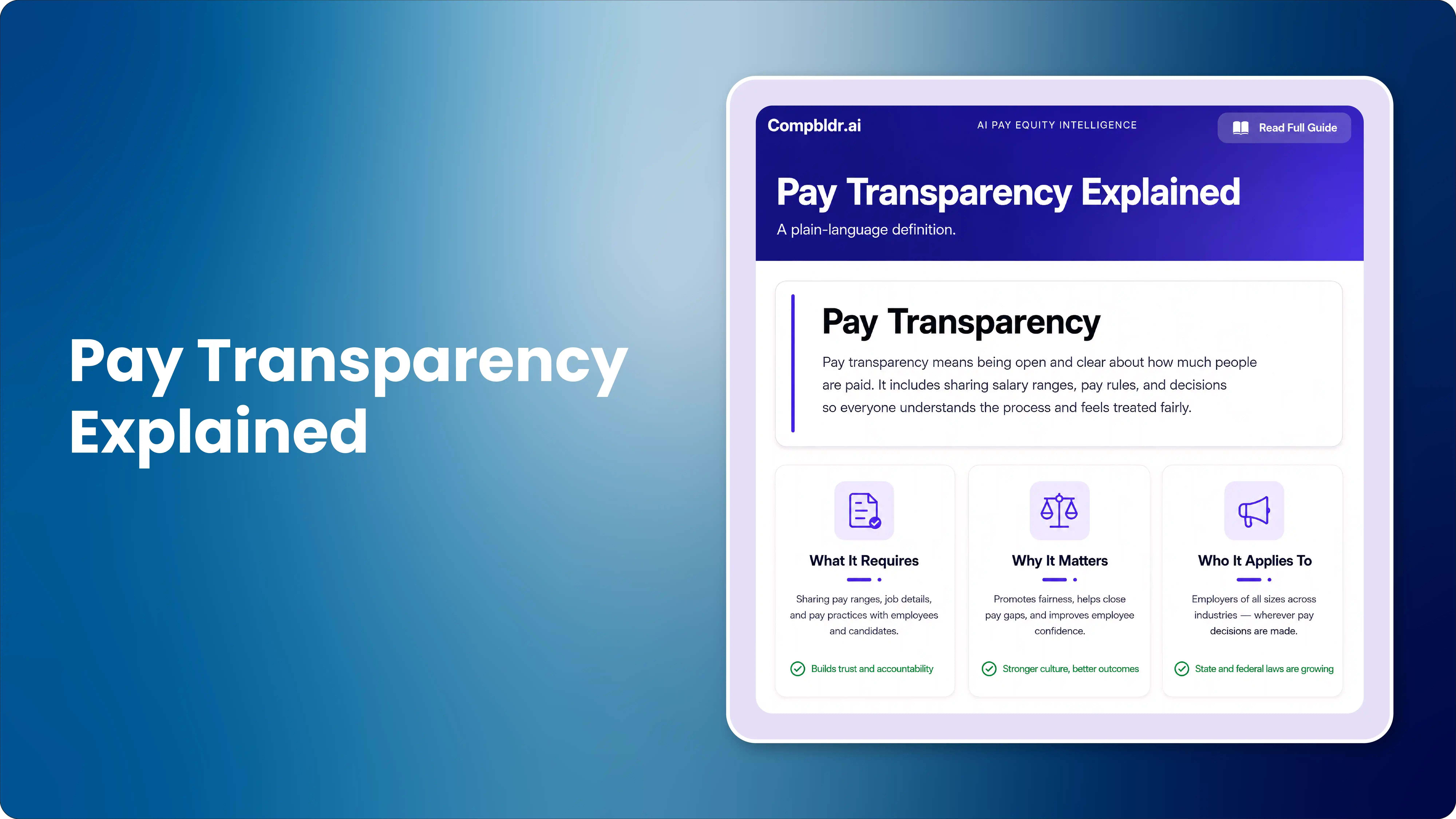
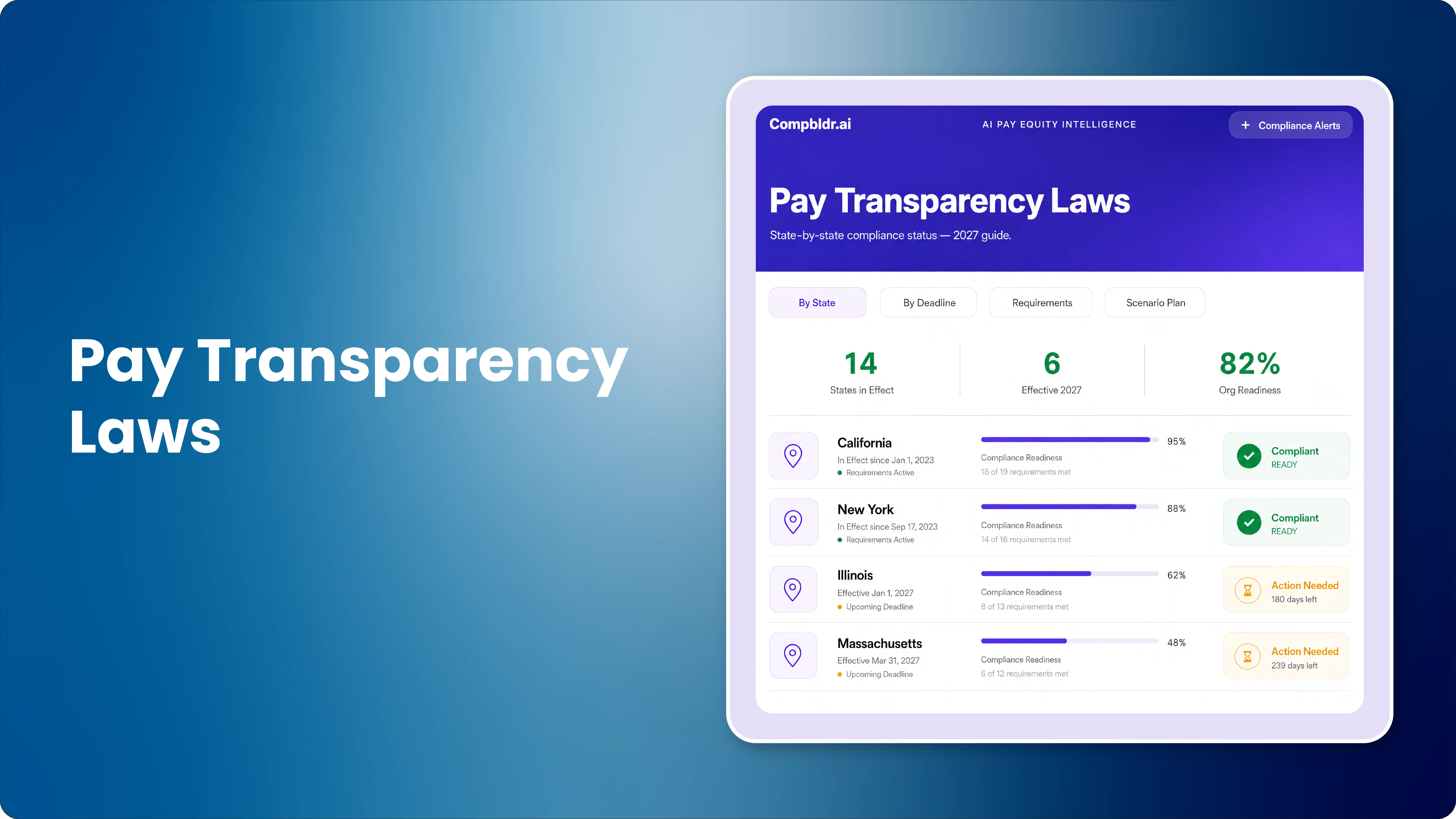
As pay transparency laws expand across US states and the EU, the compensation philosophy must specify the organization's approach to salary range disclosure: whether it discloses ranges proactively to all employees, provides ranges upon request, or meets only the minimum legal disclosure requirements. This approach must be consistent and documented before the organization is audited or challenged.
Total rewards philosophy
Base salary is one component of the total value an employee receives. The compensation philosophy should articulate how the organization thinks about the full total rewards package: base salary, short-term incentives, long-term incentives, benefits, and non-cash rewards. Organizations that compete on total rewards rather than base salary alone need a philosophy that explicitly makes that case and defines how each component is designed to compete.
Governance framework
The philosophy must specify who has authority to make which pay decisions, what approval thresholds require escalation, and how exceptions to the standard compensation framework are handled and documented. Without governance provisions, the philosophy exists but does not govern.
For readers aligning stakeholders on market positioning, internal equity, pay transparency, total rewards, and governance, the related compensation concepts in the CompBldr Compensation Glossary provide concise definitions for the terminology used throughout this guide.
A philosophy becomes operational when those principles flow into actual HR and Finance decisions. See how to connect compensation strategy to day-to-day pay decisions across job structure, market pricing, salary ranges, merit planning, and total rewards.
How to Make a Compensation Philosophy Operational
Connect it to your job architecture
Every grade in your job architecture should have a documented connection to the compensation philosophy's market positioning statement. The salary band for Grade 5 should reflect the stated percentile target for that job family, built from survey data using the documented methodology.
Reference it in every offer and merit decision
Offer approval templates should include a field that connects the proposed salary to the compensation philosophy's positioning statement. Merit cycle guidance documents should reference the philosophy's equity commitments when explaining how the merit matrix was configured. Making the philosophy a referenced document in actual decision workflows is what transforms it from an aspiration into governance.
Review it annually
A compensation philosophy written in 2022 may not reflect the organization's strategy, market position, or regulatory environment in 2026. Annual review, typically tied to the compensation planning cycle, ensures the philosophy remains current and that any material changes (a decision to move from P50 to P75 for engineering, for example) are formally documented and approved before being operationalized.
Book a Demo. See CompBldr in 15 minutes.


.svg)

.svg)
.svg)

