

.svg)





.webp)

Every year, a single statistic dominates Equal Pay Day coverage: women earn some number of cents for every dollar men earn. In 2026, that number is 82 cents in the United States, according to Payscale's annual Gender Pay Gap Report, a slight decline from 83 cents the year before. The same report also includes a second, much smaller figure: 99 cents, the gap once pay is compared only between men and women in similar roles with similar qualifications. Both numbers come from the same dataset. Both are correct. They simply answer different questions, and confusing them is one of the most common and most consequential mistakes HR and compensation teams make when reporting pay equity internally or externally.
The distinction is not academic. A board member who hears “82 cents on the dollar” and a board member who hears “99 cents on the dollar” will draw very different conclusions about how urgently the organization needs to act, and both reactions are partially right. The 82-cent figure reflects which jobs women and men actually hold across the organization, including how many women reach senior, higher-paying roles. The 99-cent figure reflects whether men and women in the same role are paid the same. An organization can have a wide unadjusted gap and a near-zero adjusted gap simultaneously, which is in fact the most common pattern, and that combination requires a completely different response than a wide gap in both measures.
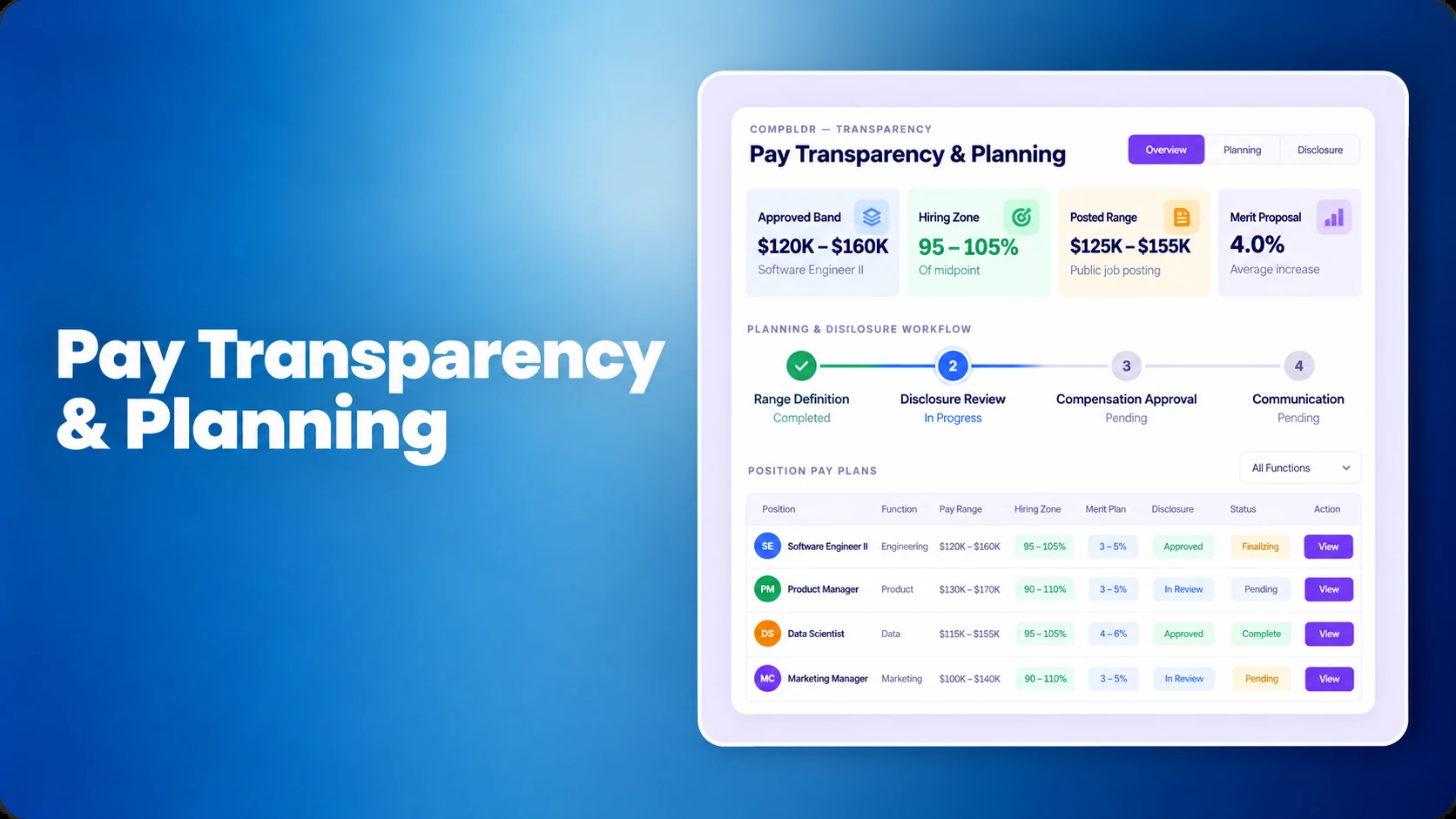
This matters more now than at any point in the past decade. Pay transparency laws in a growing number of US states require salary range disclosure, and the EU Pay Transparency Directive, which takes effect for covered employers in 2026, sets a specific 5 percent threshold for the adjusted gap that triggers a mandatory joint pay assessment. Organizations that cannot explain the difference between their two numbers, or worse, that have only ever calculated one of them, will struggle to respond credibly when a regulator, employee, or journalist asks the obvious follow-up question.
Compensation and HR teams are increasingly the ones asked to produce both figures on short notice, often in response to a board request, a media inquiry, or a regulatory filing deadline, rather than as part of a planned annual review. Teams that have already built the infrastructure to calculate both numbers continuously answer that request in minutes. Teams that have not spend weeks reconstructing a defensible analysis from scratch, usually under time pressure that makes the methodology harder to get right.
What Is the Difference Between Adjusted and Unadjusted Pay Gap?
The unadjusted, or raw, pay gap compares the average or median pay of all women to all men in an organization or economy, with no controls applied. It captures every factor that influences who holds which jobs, including occupational segregation and unequal access to promotions. The adjusted, or controlled, pay gap compares pay only among employees in comparable roles, controlling for variables such as job level, tenure, performance, location, and education, to isolate pay differences that cannot be explained by legitimate factors. The unadjusted gap is almost always larger than the adjusted gap, because it reflects both within-role pay differences and the broader pattern of which roles each group occupies. Both figures are meaningful, and neither one alone tells the full story of an organization's pay equity position.
Gender Pay Gap Statistics: Where Things Stand in 2026
The most current and widely cited US figures come from Payscale's 2026 Gender Pay Gap Report, released in March 2026. The unadjusted gender pay gap stands at $0.82, meaning women earn 18 percent less than men in aggregate, a one-cent widening from $0.83 in 2025. The adjusted gap, by contrast, holds at $0.99 for the fifth consecutive year. Payscale estimates the unadjusted gap translates to $14,300 less per year in median pay for women, more than $1 million over a 40-year career, and roughly $1.1 trillion in aggregate lost earnings annually across the US workforce.
US Census Bureau data for 2024 places median annual earnings at $57,520 for women working full-time versus $71,090 for men, consistent with the unadjusted figures reported elsewhere. The gap also varies sharply by demographic and career stage: Payscale's research finds women age 45 and older earn $0.71 unadjusted, and mothers earn $0.74 unadjusted compared to fathers, while the adjusted gap for mothers closes almost entirely once role, tenure, and other factors are held constant.
State-level pay transparency laws show a similarly split pattern. Payscale's 2026 analysis found nine states with pay transparency requirements, including California, New York, and Illinois, had closed their controlled gender pay gap entirely, while six other states with similar laws on the books had not, suggesting that disclosure requirements alone do not guarantee equal pay for equal work without active compensation governance behind them.
Global figures are harder to pin to a single number, since methodologies vary widely between the International Labour Organization, the World Economic Forum, and national statistics agencies, and the gap differs enormously by country and by whether labor force participation is included in the calculation. What is consistent across sources is the direction: every major global dataset shows a persistent gap, larger in developing economies and narrower in a handful of Nordic countries, with no major economy at full parity. The ILO's modeled wage estimates and the World Economic Forum's annual Global Gender Gap Report both track this trend over time rather than producing one universally agreed figure, which is itself a useful reminder for HR teams: when a statistic about the gender pay gap is cited without specifying whether it is adjusted or unadjusted, and without naming a source and a year, it is worth treating the number with some caution before repeating it internally.
How the Unadjusted (Raw) Pay Gap Is Calculated
The unadjusted pay gap is calculated by comparing the average or median pay of one group against another, typically all women versus all men, across an entire organization or economy, without controlling for any other variable. The calculation is simple: divide women's average or median pay by men's average or median pay. The result captures every factor that contributes to the difference, including how many women hold senior, higher-paying roles, which industries and functions skew toward one gender, and how access to promotions has historically been distributed. This is the number most frequently cited in news coverage and the number used as the baseline metric in the EU's gender pay gap reporting requirements.
How the Adjusted (Controlled) Pay Gap Is Calculated
The adjusted pay gap is typically calculated using a regression analysis that holds constant the legitimate, job-related factors that influence pay, most commonly job title or evaluated job level, tenure, performance rating, location, and sometimes education. The regression isolates the portion of the pay difference that remains after accounting for those factors, which is the portion most plausibly attributable to gender rather than to legitimate compensable differences. A regression-based approach is considered more rigorous than a simple side-by-side comparison of job titles, because two employees with the same title can still have meaningfully different scope, which a title-only comparison would miss.
| Aspect | Unadjusted (Raw) Gap | Adjusted (Controlled) Gap |
|---|---|---|
| What it measures | Average pay difference across the entire workforce | Pay difference within comparable roles |
| What it controls for | Nothing | Job level, tenure, performance, location, education |
| 2026 US figure (Payscale) | $0.82 per dollar | $0.99 per dollar |
| What a gap indicates | Representation and promotion access issues | Possible direct pay discrimination within roles |
| Primary use case | Workforce strategy, DEI reporting, public disclosure | Pay equity audits, legal defensibility, remediation targeting |
.webp)
Monitor Pay Equity Continuously, Not Once a Year
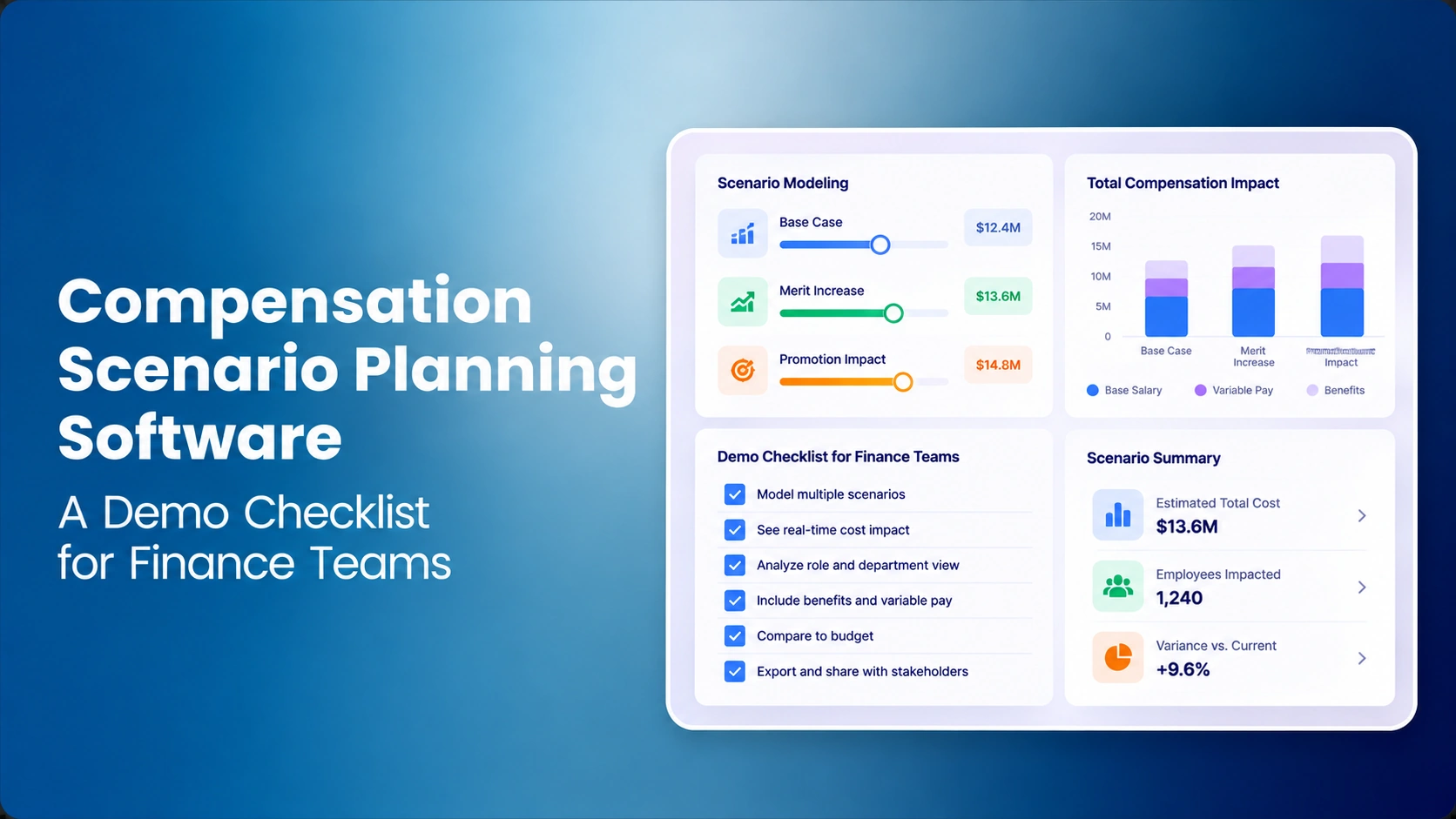
A once-a-year spreadsheet calculation only gives you a snapshot; it won't catch a gap that quietly reopens after a new hire, promotion, or merit cycle. Organizations that manage this well treat both calculations as ongoing, not annual events.
Why Reporting Only One Number Is Misleading
Citing only the adjusted gap, 99 cents on the dollar, risks understating a real problem. A near-zero adjusted gap can coexist with a workforce where women are concentrated in lower-paying functions and rarely reach senior, higher-paying roles, which is exactly the pattern reflected in the much wider unadjusted figure. An organization that publicizes only its 99-cent number while ignoring an 18-point unadjusted gap is technically accurate and substantively misleading.
Citing only the unadjusted gap risks the opposite problem: implying direct pay discrimination within roles when the underlying driver may be occupational segregation, tenure differences, or unequal access to high-paying functions rather than unequal pay for the same work. Payscale's 2026 data illustrates this clearly with parental status: mothers earn $0.74 for every dollar fathers earn when uncontrolled, but the gap closes to $0.99 once role, tenure, and other factors are held constant. The honest interpretation is not that mothers are paid less for the same work, but that motherhood correlates with slower career progression and reduced access to higher-level roles, a structural issue that a pay adjustment alone cannot fix.
Consider a 600-person professional services firm that runs its first pay equity analysis and finds an adjusted gap of $0.98, well inside any reasonable threshold. Leadership is tempted to treat the work as finished. A closer look at the unadjusted figure, however, shows women hold only 22 percent of senior associate and partner-track roles despite making up 51 percent of the entry-level workforce. The pay within each level is fair. The path into the higher-paying levels is not equally accessible, and no individual pay adjustment will fix that. The firm's real work is in promotion criteria, sponsorship, and leveling consistency, not in the compensation system at all, which is exactly the kind of finding that gets missed when only the adjusted number is reported.
The organizations that communicate pay equity credibly report both numbers together, explain what each one measures, and connect each one to a distinct type of corrective action.
How Compensation Platforms Calculate and Monitor the Adjusted Gap
Manually calculating an adjusted pay gap in a spreadsheet is possible for a small organization with a handful of roles, but it breaks down quickly at scale, and it rarely gets repeated often enough to catch new gaps as they open. A compensation platform built for this calculates the adjusted gap by running regression analysis against structured job architecture data, evaluated grade or job evaluation score, tenure, performance rating, and location, rather than relying on job title alone, which produces a result that holds up better under scrutiny because the control variables are documented and consistent across every calculation rather than reconstructed by hand each time.
This matters most at the moment a gap is found. A platform connected to job architecture and JESAP evaluation data can show exactly which factor accounts for a flagged difference, an evaluation score one grade apart, a tenure difference of three years, a location-based market adjustment, rather than leaving the compensation team to manually reconstruct the explanation after the fact. That speed matters under the EU Pay Transparency Directive's joint pay assessment requirement, which expects employers to document the reasoning behind any gap above the 5 percent threshold, not simply report the number.
.webp)
Automate Pay Equity Monitoring Year-round
If your adjusted pay gap calculation currently depends on an annual consultant engagement and a static spreadsheet, every promotion, hire, and merit increase between audits is invisible until the next cycle. A connected system that recalculates continuously closes that visibility gap.
A Four-Step Action Plan When You Have Both Numbers
- Calculate both gaps regularly, not as a one-time project. A single annual snapshot misses gaps that open and close between audit cycles.
- Investigate unexplained adjusted gaps role by role. A flagged gap at the role level needs a documented explanation tied to a specific factor, not a company-wide average that obscures where the actual disparity sits.
- Address the drivers of the unadjusted gap separately from individual pay corrections. Closing the unadjusted gap usually requires changes to hiring pipelines, promotion criteria, and leveling consistency, not pay adjustments alone.
- Communicate the right number to the right audience, with context. Internal compensation committees need both figures and the methodology behind each. Public-facing communication needs enough explanation that neither number is read in isolation.
Communicating Pay Gap Findings to Leadership and Employees
Leadership conversations should lead with both numbers side by side, since presenting only one invites the audience to draw the wrong conclusion in either direction. It helps to frame the adjusted gap as the audit-and-remediate metric and the unadjusted gap as the workforce-strategy metric, since that framing maps each number to a concrete owner and a concrete next step rather than leaving both as abstract statistics.
Employee communication requires a different register. Most employees asking about pay equity want to know whether their own pay is fair relative to peers in their role, which is an adjusted-gap question, not an unadjusted one. Training managers to explain that distinction, and to avoid citing the unadjusted figure as if it described individual pay decisions, prevents a significant share of the confusion and distrust that surfaces after a pay equity disclosure.
Legal and Compliance Risk of Ignoring the Distinction
The EU Pay Transparency Directive, applicable to covered employers from 2026 onward, sets a specific threshold: an adjusted gender pay gap above 5 percent in any employee category that cannot be justified by objective, gender-neutral factors requires a joint pay assessment conducted with employee representatives. In the United States, the EEOC and OFCCP can request pay data that effectively forces an unadjusted comparison, while litigation and state-level pay data reporting requirements increasingly expect organizations to be able to produce an adjusted pay equity analysis as part of a defensible response. Organizations that have only ever calculated one of the two figures are poorly positioned to respond to either kind of inquiry. This is general compliance information rather than legal advice, and organizations facing a specific regulatory inquiry or threshold question should confirm current requirements with employment counsel.
The adjusted and unadjusted gender pay gap are not competing claims about the same fact. They are two different measurements answering two different questions, and an organization needs both to understand its actual pay equity position. The unadjusted figure shows whether women and men have equal access to the organization's higher-paying roles. The adjusted figure shows whether women and men in the same roles are paid the same. In 2026, the gap between those two answers, 82 cents versus 99 cents in the US data, is itself the most important data point, because it tells you exactly which kind of work needs to happen next.
Calculate both. Report both. Build the structure, job architecture, evaluation, and continuous monitoring that lets you explain either number with confidence whenever someone asks, whether that someone is a board member, a regulator, or an employee who read the headline statistic and wants to know what it means for them specifically.
Both Numbers, One Source
Adjusted & Unadjusted Pay Gap: Calculated Together
CompBldr connects job architecture, JESAP evaluation, and pay equity analysis in one platform, so both the adjusted and unadjusted gender pay gap are calculated continuously from the same governed data, not reconstructed by hand before every audit.
Book a 15-Minute Demo

.svg)

.svg)
.svg)

