

.svg)





.webp)

Why the Distinction Between Merit and Promotion Matters
They serve different compensation purposes
A merit increase rewards individual performance within the current role's salary band. A promotional increase reflects a change in the role itself: the employee is now performing work of greater scope, accountability, and complexity at a higher grade. Treating one as a substitute for the other produces compensation distortions that compound over time.
They draw from different budget lines
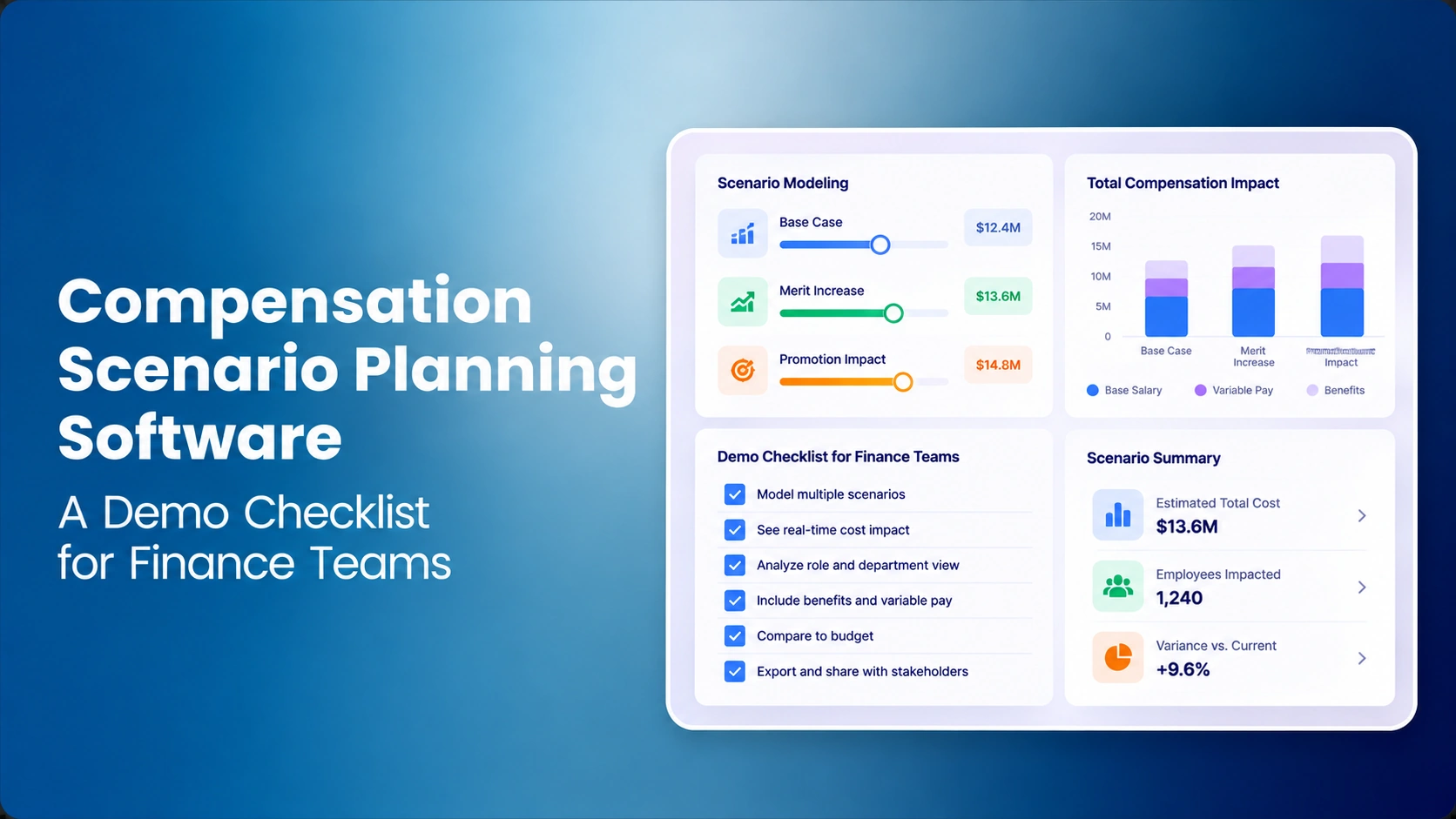
In a governed compensation cycle, merit increases and promotional increases should remain distinguishable in the budget and approval records, even if Finance funds them from one overall pool. Separate action codes or reporting lines make it possible to see the cost of each type of compensation action without forcing every organization into the same budget structure.
How Merit Increases Work
Tied to the merit matrix and the employee's grade placement
Where the organization's policy uses a merit matrix, the matrix can combine performance rating with a range-position measure such as compa-ratio to guide recommended increases. The weighting, cells, and exception rules vary by organization. The matrix should make the decision logic visible; it should not be treated as a universal formula or as a substitute for reviewing compression, internal equity, and budget constraints.
Constrained by the salary band maximum
When an employee is at or near the maximum of the current salary band, a merit increase needs a policy check before it is applied to base pay. Depending on the organization's compensation policy, the team may cap base pay, use a lump-sum recognition payment, route an exception for review, or recheck the employee's grade placement, range competitiveness, and compression. Reaching the range maximum does not by itself prove that a promotion or range change is required.
Documented as a performance-based action
Document the employee's performance rating, relevant range-position context, the approved merit increase, and the approver or review path. That record makes the decision easier to reconstruct during a later pay equity review or compensation audit without implying that documentation alone establishes a legal defense.
How Promotional Increases Work
Triggered by a higher-scope role change
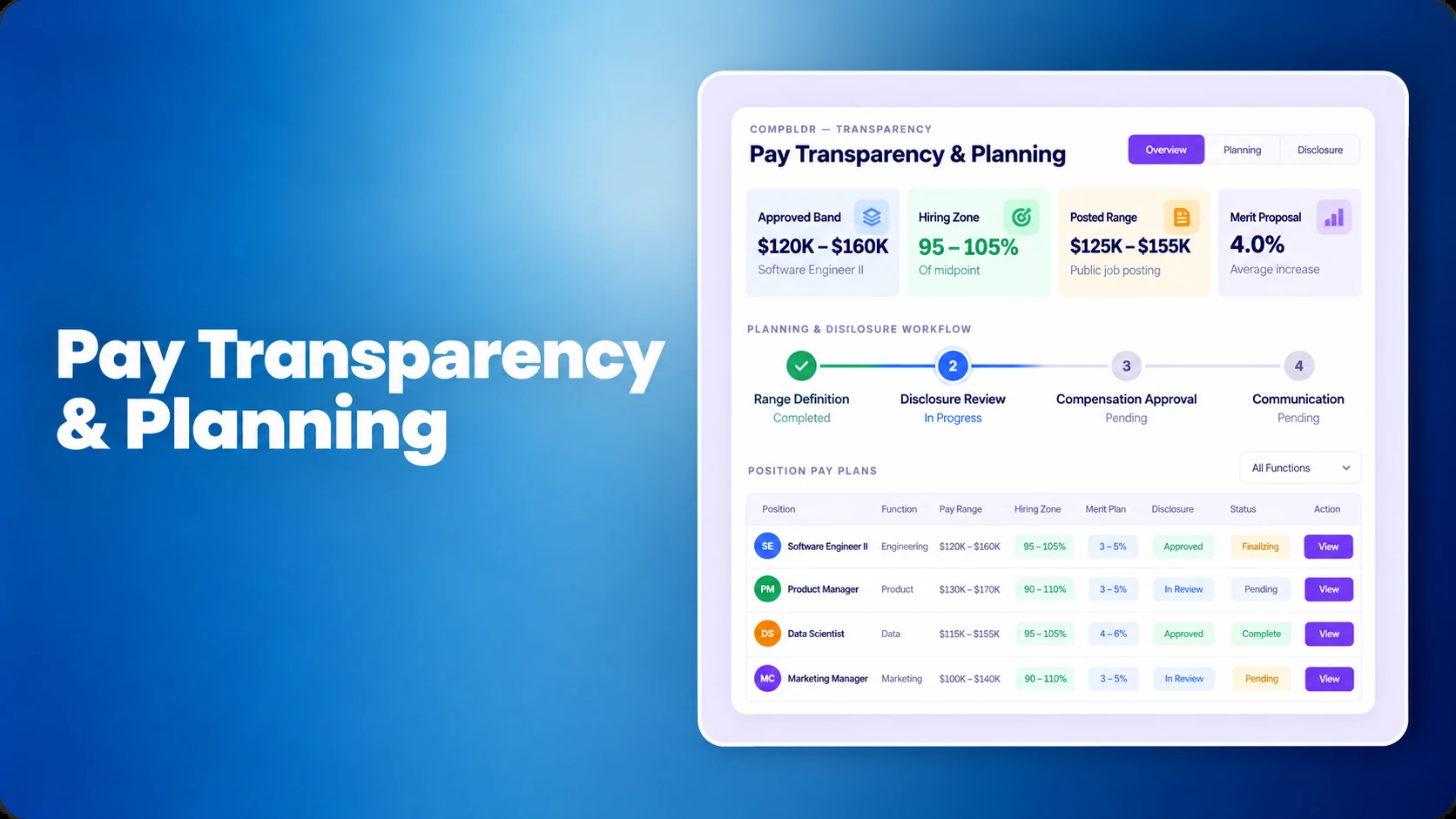
A promotion reflects a move into work with greater scope, accountability, complexity, or leadership responsibility. Depending on the organization's job architecture, that move may also change the employee's level, grade, or both. The structural change should be supported by the role requirements, not inferred from title alone.
Sized to land the employee in the new band
Size a promotional increase against the new role and the organization's approved compensation policy rather than a universal percentage or fixed range position. Review the new grade's salary range, the employee's current pay, internal peer relationships, market evidence, and any compression risk before approving the new salary. A salary that is already high in the new range is a review signal, not proof that the promotion was overdue.
Separate from the merit decision
Keep the promotion and merit decisions distinguishable even when they are reviewed in the same cycle. Some organizations approve both actions, some apply only one, and others use policy-specific interaction rules. The control point is to preserve separate action types, rationale, budget impact, and approvals so a promotion is not accidentally treated as a merit adjustment or counted twice.
Handling Both in the Same Compensation Cycle
The combined increase calculation
When an employee receives both a promotional increase and a merit increase in the same cycle, follow the calculation order defined by the organization's compensation policy and document which salary base each percentage uses. Whether the promotion or merit action is applied first can change the final base salary, so the system should preserve each action separately and make the calculation sequence reviewable.
Communicating both actions to the employee
When communicating a combined compensation action, clearly distinguish between the promotional increase (which reflects the new role's scope and grade) and the merit increase (which reflects performance). Employees who understand why their salary changed are more likely to perceive the change as fair and are less likely to second-guess the amounts based on comparisons with colleagues.
A governed cycle should connect to merit planning software so merit increases and promotions stay tied to the same compensation evidence instead of becoming standalone spreadsheet decisions.
Before approving individual changes, check salary bands, market adjustments, and pay compression. That connection makes the next decision easier to review and explain.
After proposals are submitted, review outcomes through compensation reporting. Using the same evidence across these steps reduces conflicting assumptions between HR, Finance, and managers.
Keep the operating workflow connected with integrations. These controls preserve traceability without adding a separate manual process.
Book a Demo See CompBldr in 15 minutes.


.svg)

.svg)
.svg)

