

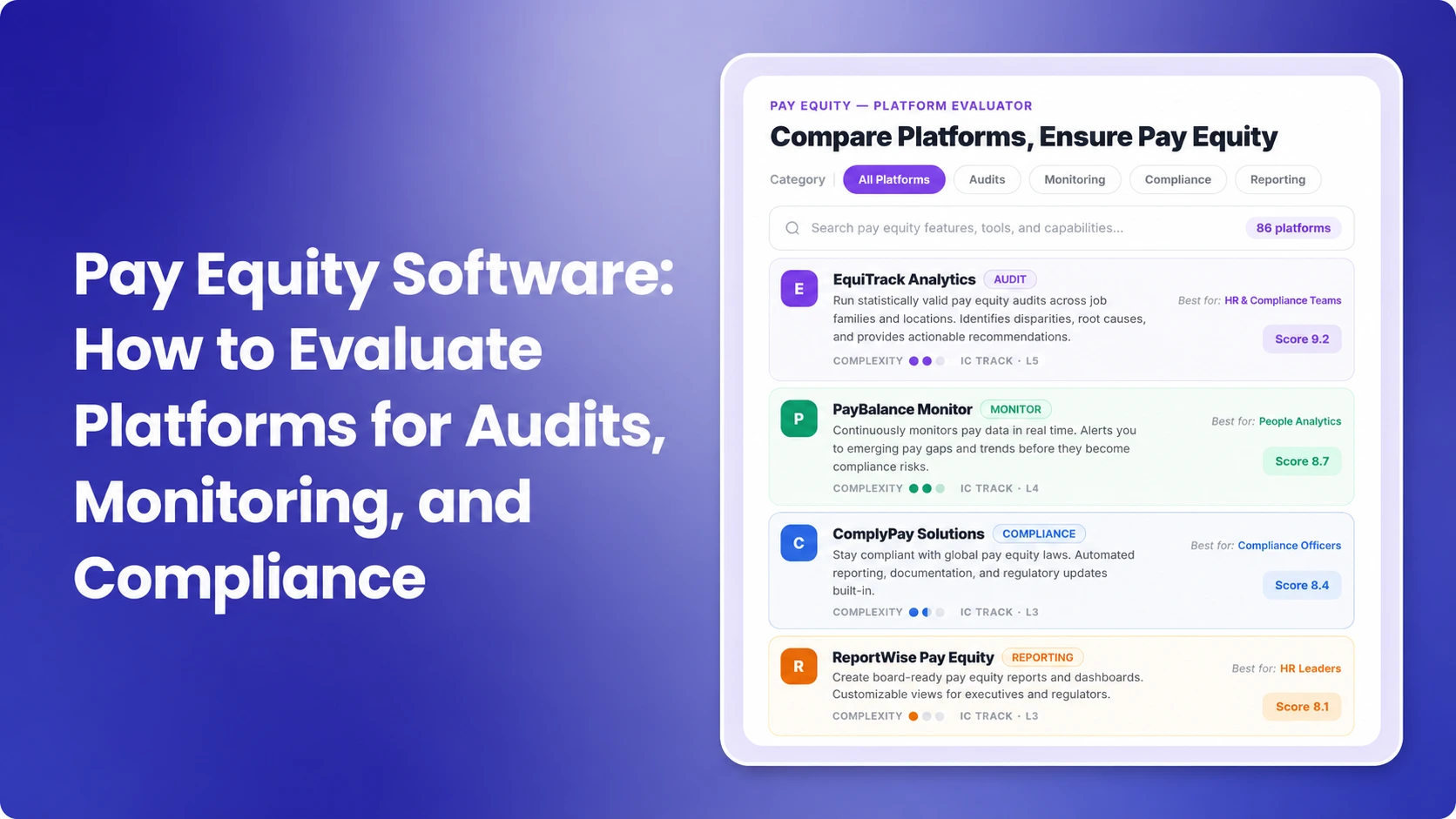

Pay Equity Software: How to Evaluate Platforms for Audits, Monitoring, and Compliance

Use this seven-part framework to evaluate pay equity software for job comparability, governed data, continuous monitoring, versioned reporting, and compensation decisions.

Updated On:
July 18, 2026
Mahesh Kumar
Founder, TraineryHCM.com

Table of Contents

Pay equity software can make compensation differences easier to see. That does not mean every platform can support a reliable pay equity process.

Some tools stop at dashboards. Others connect job structure, salary ranges, employee data, pay decisions, approvals, and reporting so teams can understand not only where a difference exists, but also how it developed and what should be reviewed next.

For HR, Total Rewards, and executive teams evaluating pay equity software, the right question is not simply, “Can this platform show a pay gap?” The better question is, “Can this platform support a repeatable, documented, and reviewable compensation process?”

This guide explains the capabilities to evaluate before you shortlist a platform or book a demo.

Important: This article provides general information about pay equity software and compensation governance. It is not legal advice. Equal pay and pay transparency requirements vary by jurisdiction, and software does not replace legal counsel, statistical expertise, or human review.

What Should Pay Equity Software Do?

Pay equity software should help organizations define appropriate comparison groups, analyze compensation differences, identify outliers, document legitimate pay factors, monitor new pay decisions, and produce traceable reports. Stronger platforms connect pay equity analysis with job architecture, salary ranges, market data, approval workflows, and decision history. Software can support a consistent process, but it cannot guarantee compliance or independently determine whether discrimination has occurred.

What Types of Pay Equity Software Are Available?

Buyers often compare products that solve different parts of the problem. The main categories include:

  • Standalone pay equity audit software: Built primarily for statistical analysis, remediation modeling, and formal audit workflows.
  • HRIS-embedded pay equity dashboards: Convenient for basic reporting, but depth may depend on the broader HR platform and available data controls.
  • Integrated compensation platforms: Connect equity analysis with job architecture, salary ranges, market benchmarking, compensation planning, and reporting.
  • Consulting-supported tools: Combine software with legal, statistical, or compensation advisory services for organizations that need additional expertise.

The best fit depends on whether the organization needs a point-in-time audit, continuous monitoring, broader compensation governance, or a combination of software and expert support.

Why a One-Time Pay Equity Audit Is Not Enough

A formal pay equity audit can provide a useful point-in-time view. The problem is that compensation changes continuously.

New hires receive offers. Employees are promoted. Managers recommend merit increases. Market adjustments are approved. Off-cycle changes are made. Teams reorganize. Salary ranges are updated.

A report that looked reasonable in January may no longer reflect the organization’s compensation position after the next major pay cycle.

Organizations should distinguish among three related activities:

  • Pay equity analysis: Reviewing compensation differences and identifying patterns or outliers.
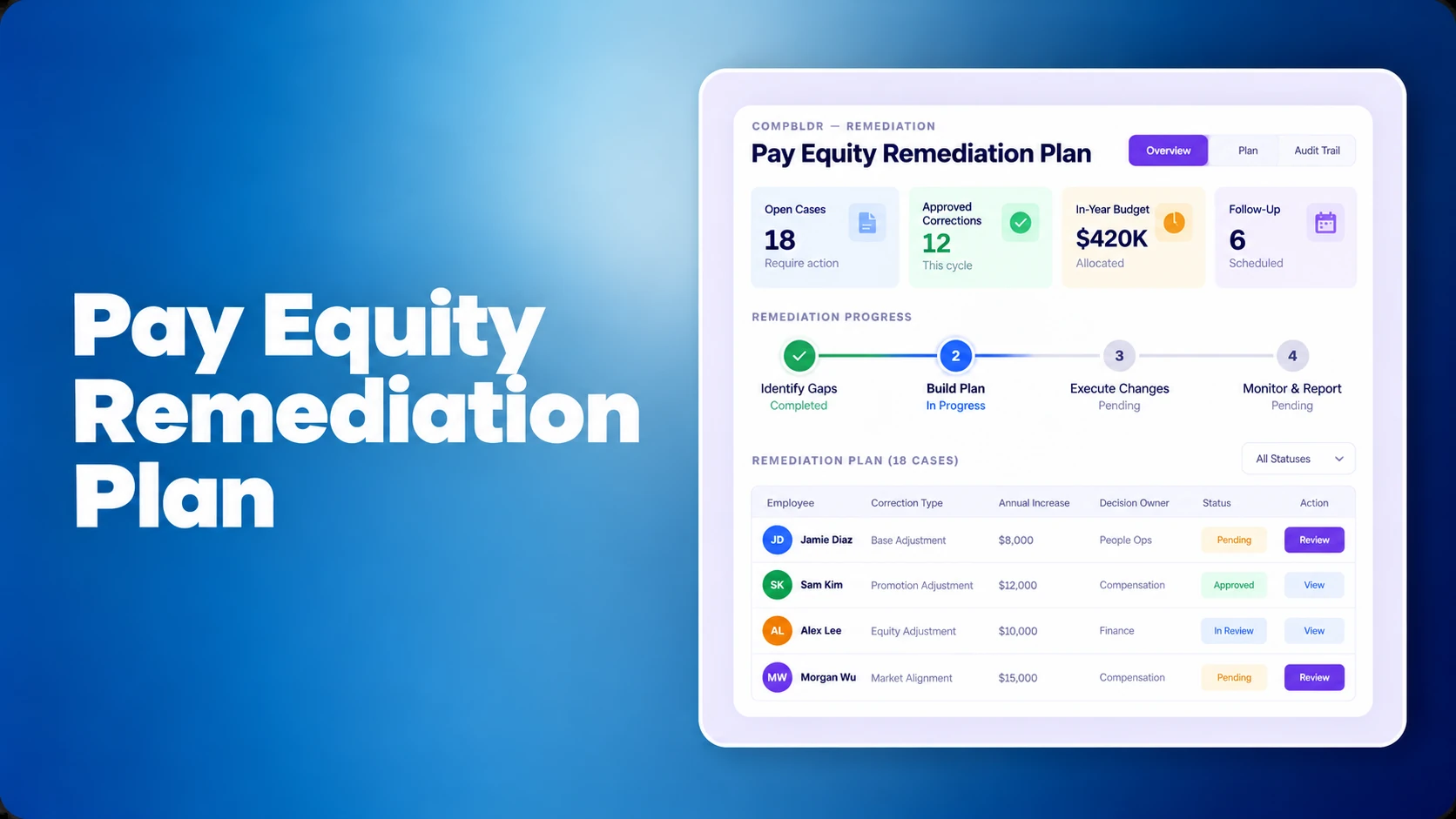
  • Pay equity remediation: Investigating and addressing unexplained or unjustified differences.
  • Pay equity monitoring: Tracking how new compensation decisions affect equity between formal reviews.

A useful platform should support all three without forcing the team to rebuild the analysis from spreadsheets every time.

Dashboard vs. Audit-Ready Compensation Record

Dashboards are useful for exploration. They help teams spot patterns, filter populations, and view current metrics. But a dynamic dashboard alone may not preserve the exact population, filters, assumptions, and source data used in a prior review.

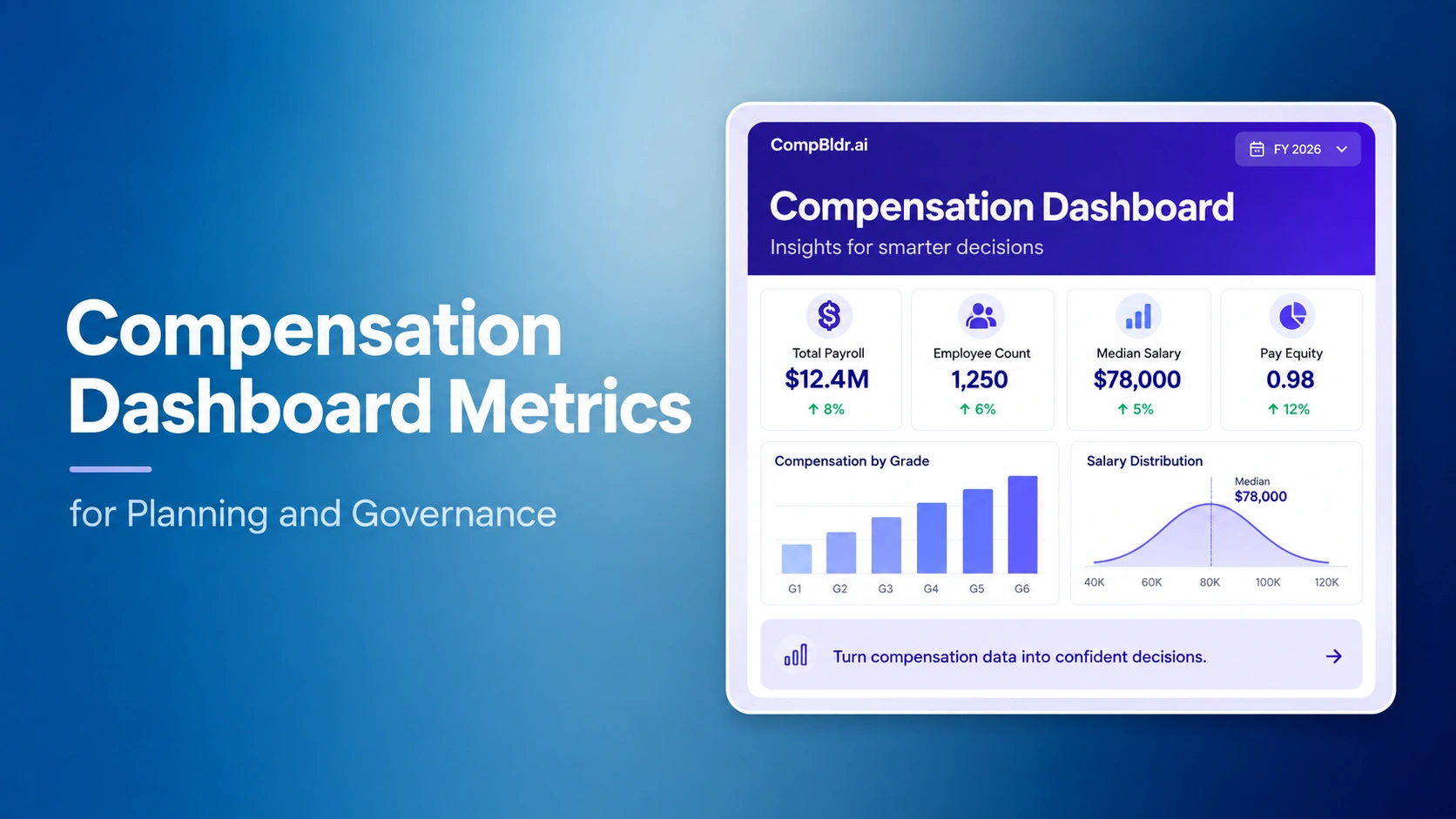
A basic dashboard shows current gaps and dynamic views. A governed pay equity system connects metrics to source records, creates fixed reports, documents approvals and rationale, links job and market data, and supports continuous monitoring.

“Audit-ready” should not be interpreted as legally sufficient in every situation. It means the system helps preserve a reviewable record of the data, methodology, population, decisions, and outputs used in the process.

1. Can the Platform Build Defensible Comparison Groups?

Pay equity analysis depends heavily on who is compared with whom.

Job titles alone are often unreliable. Two employees may have similar titles but different responsibilities, scope, or required skills. Other employees may perform substantially similar work under different titles.

Under the U.S. Equal Pay Act, the comparison focuses on work requiring substantially equal skill, effort, and responsibility under similar working conditions. Job content matters more than the title itself. The law also recognizes certain lawful bases for differences, such as seniority, merit, production measures, or another factor other than sex. See the U.S. Department of Labor’s Equal Pay Act text and the EEOC’s equal pay guidance.

When evaluating pay equity software, ask how the platform uses job families, career levels, evaluated grades, job content, location, business unit, working conditions, and management scope.

A reliable job architecture gives the analysis a stronger foundation because the organization has consistent definitions for work, levels, and internal relationships.

2. Can Every Metric Be Traced to Governed Data?

A pay equity result is only as reliable as the data behind it.

The platform should make it possible to trace a metric or outlier to the source records that produced it. Those records may include current compensation, job and grade assignments, salary ranges, market matches, pay actions, effective dates, location, demographic data, and performance or tenure information where appropriate.

During a demo, ask whether reviewers can trace outliers to underlying records, reproduce calculations, see which data was used on a specific date, and identify missing or inconsistent records.

Without data lineage, a dashboard may show a number without giving the team enough information to understand or defend the process that produced it.

3. Does It Support the Analysis Your Review Requires?

Not every organization needs the same analytical method. A platform may provide raw pay-gap calculations, median or average comparisons, comp-ratio distributions, range-position analysis, cohort filters, demographic cuts, outlier detection, trend analysis, or regression and adjusted analysis.

The presence of a statistical model does not automatically make an analysis appropriate. The method should match the purpose of the review, data quality, population size, and expert guidance where needed.

Buyers should confirm exactly which methods are available today, which require configuration, and which require external analysis.

4. Can It Monitor Pay Equity During Compensation Decisions?

The most valuable time to identify a potential issue is often before a pay decision is finalized.

A strong platform should help teams monitor equity during hiring offers, promotions, merit increases, market adjustments, off-cycle increases, manager recommendations, and compensation-cycle approvals.

Continuous monitoring helps the compensation team investigate potential issues before actions become final. This is where pay equity software should connect with compensation planning, rather than operating only as a separate annual reporting tool.

Review Pay Equity Before the Compensation Cycle Closes

See how CompBldr connects job architecture, governed pay records, compensation planning, and versioned reporting so qualified reviewers can investigate changes with clear source context. Software supports the review process; it does not replace legal or statistical judgment.

Book a Demo

5. Can It Produce Fixed, Versioned Reports?

A live dashboard changes as the data changes. That is useful for monitoring, but it may not be enough for a board, leadership team, legal reviewer, or future audit.

A fixed report should preserve the report date, data period, population, filters, comparison methodology, findings, review status, exported evidence, and version history.

The EEOC advises employers to define compensation criteria, apply them consistently, document pay decisions, and retain relevant records. See the EEOC’s Pay Tips and recordkeeping requirements.

When evaluating software, confirm whether it provides versioned compensation reports, rather than only screenshots or export files with no retained context.

6. Does It Add Market and Salary Structure Context?

A compensation difference is a signal to investigate. It is not automatically proof that the difference is unjustified.

The analysis may need context from salary range minimums, midpoints and maximums, comp-ratio, range penetration, market reference points, geographic differentials, job level, experience, performance, seniority, and specialized responsibilities.

Market benchmarking and compensation analytics help teams understand the context around an apparent gap. That context should support investigation, not become a blanket justification for every difference.

7. Does It Document Decisions, Approvals, and Rationale?

Pay equity governance is not only about the final number. It is also about the decision process.

The platform should identify who proposed and approved an action, when it changed, which policy or factor supported it, whether an exception was granted, what evidence was reviewed, and whether the rationale can be retrieved later.

The EEOC recommends determining compensation criteria in advance, applying them consistently, and documenting decisions that affect starting pay, bonuses, raises, adjustments, and performance evaluations.

Pay Equity Software Evaluation Checklist

  • Job-content-based comparator groups
  • Consistent job families, levels, and grades
  • Data quality controls
  • Traceable source records
  • Appropriate analytical methods
  • Continuous monitoring during pay decisions
  • Fixed, versioned reports
  • Market and salary structure context
  • Approval workflows
  • Decision rationale and exception documentation
  • Role-based access and security controls
  • Export or integration options
  • Human review and escalation workflows

Questions to Ask During a Vendor Demo

  1. How does the platform define and adjust comparison groups?
  2. Can every metric be traced to its source record?
  3. Which analytical methods are included today?
  4. How are hiring, promotion, merit, and off-cycle decisions monitored?
  5. Can a fixed report be saved with its population, filters, and date?
  6. How are salary ranges and market data incorporated?
  7. Can the system document exceptions, rationale, and approvals?
  8. What data quality checks are built in?
  9. What still requires manual review or outside expertise?
  10. Which capabilities are native, configurable, or dependent on another system?

Common Pay Equity Software Selection Mistakes

Choosing Based on Dashboards Alone

A polished dashboard does not prove that the underlying records are governed, traceable, or suitable for later review.

Comparing Titles Instead of Job Content

Titles vary across departments and organizations. Comparator logic should reflect actual work, level, and responsibility.

Ignoring Data Quality

Missing grades, outdated ranges, inconsistent locations, and incorrect effective dates can distort the result.

Treating a Statistical Flag as Proof

An outlier or adjusted gap is a reason to investigate. It does not independently establish discrimination.

Reviewing Equity Only Once a Year

Compensation changes throughout the year. Monitoring should continue between formal reviews.

Failing to Document Remediation Decisions

The team should preserve why an adjustment was made, who approved it, and what data supported it.

Assuming Compliance Means the Same Everywhere

Federal, state, local, and international requirements differ. Buyers should confirm the jurisdictions and use cases the platform supports.

Buying Roadmap Features

Ask whether each important capability is generally available, configurable, in beta, or planned for a future release.

How CompBldr Supports Governed Pay Equity Analysis

CompBldr connects compensation analytics with the records that shape pay decisions.

Its analytics layer reads from governed job evaluation, market benchmarking, compensation planning, and pay-action records. This allows pay equity metrics to be reviewed in the context of evaluated grades, benchmarked salary ranges, and documented compensation actions.

CompBldr Analytics can surface pay equity trends, comp-ratio distributions, range adherence, and outliers while tracing metrics back to the records that produced them. Its reporting capabilities produce fixed, versioned packages, including pay equity analyses by gender and ethnicity, for leadership and formal review.

The practical advantage is not simply another dashboard. It is the ability to connect analysis with the job structure, market context, decisions, approvals, and reports behind the result.

Evaluate Pay Equity Software with Confidence

See How CompBldr Connects Analysis, Decisions, and Reporting

Explore how job architecture, market data, compensation planning, equity monitoring, and versioned reporting work together in one governed process.

Book a Demo

Key Takeaways

  • A one-time audit provides a snapshot. Continuous monitoring helps teams identify potential issues as hiring, promotion, merit, and off-cycle decisions occur.
  • Job content and consistent comparator groups matter more than job titles alone when reviewing equal-work questions.
  • Buyers should confirm that every metric can be traced to governed source records and reproduced latFxed, versioned reports provide a stronger review record than relying only on a dynamic dashboard.
  • Statistical flags identify issues for investigation. They do not independently prove discrimination or guarantee compliance.oftware should support legal, compensation, and statistical reviewers, not replace their judgment.

Pay equity software can make compensation differences easier to see. That does not mean every platform can support a reliable pay equity process.

Some tools stop at dashboards. Others connect job structure, salary ranges, employee data, pay decisions, approvals, and reporting so teams can understand not only where a difference exists, but also how it developed and what should be reviewed next.

For HR, Total Rewards, and executive teams evaluating pay equity software, the right question is not simply, “Can this platform show a pay gap?” The better question is, “Can this platform support a repeatable, documented, and reviewable compensation process?”

This guide explains the capabilities to evaluate before you shortlist a platform or book a demo.

Important: This article provides general information about pay equity software and compensation governance. It is not legal advice. Equal pay and pay transparency requirements vary by jurisdiction, and software does not replace legal counsel, statistical expertise, or human review.

What Should Pay Equity Software Do?

Pay equity software should help organizations define appropriate comparison groups, analyze compensation differences, identify outliers, document legitimate pay factors, monitor new pay decisions, and produce traceable reports. Stronger platforms connect pay equity analysis with job architecture, salary ranges, market data, approval workflows, and decision history. Software can support a consistent process, but it cannot guarantee compliance or independently determine whether discrimination has occurred.

What Types of Pay Equity Software Are Available?

Buyers often compare products that solve different parts of the problem. The main categories include:

  • Standalone pay equity audit software: Built primarily for statistical analysis, remediation modeling, and formal audit workflows.
  • HRIS-embedded pay equity dashboards: Convenient for basic reporting, but depth may depend on the broader HR platform and available data controls.
  • Integrated compensation platforms: Connect equity analysis with job architecture, salary ranges, market benchmarking, compensation planning, and reporting.
  • Consulting-supported tools: Combine software with legal, statistical, or compensation advisory services for organizations that need additional expertise.

The best fit depends on whether the organization needs a point-in-time audit, continuous monitoring, broader compensation governance, or a combination of software and expert support.

Why a One-Time Pay Equity Audit Is Not Enough

A formal pay equity audit can provide a useful point-in-time view. The problem is that compensation changes continuously.

New hires receive offers. Employees are promoted. Managers recommend merit increases. Market adjustments are approved. Off-cycle changes are made. Teams reorganize. Salary ranges are updated.

A report that looked reasonable in January may no longer reflect the organization’s compensation position after the next major pay cycle.

Organizations should distinguish among three related activities:

  • Pay equity analysis: Reviewing compensation differences and identifying patterns or outliers.
  • Pay equity remediation: Investigating and addressing unexplained or unjustified differences.
  • Pay equity monitoring: Tracking how new compensation decisions affect equity between formal reviews.

A useful platform should support all three without forcing the team to rebuild the analysis from spreadsheets every time.

Dashboard vs. Audit-Ready Compensation Record

Dashboards are useful for exploration. They help teams spot patterns, filter populations, and view current metrics. But a dynamic dashboard alone may not preserve the exact population, filters, assumptions, and source data used in a prior review.

A basic dashboard shows current gaps and dynamic views. A governed pay equity system connects metrics to source records, creates fixed reports, documents approvals and rationale, links job and market data, and supports continuous monitoring.

“Audit-ready” should not be interpreted as legally sufficient in every situation. It means the system helps preserve a reviewable record of the data, methodology, population, decisions, and outputs used in the process.

1. Can the Platform Build Defensible Comparison Groups?

Pay equity analysis depends heavily on who is compared with whom.

Job titles alone are often unreliable. Two employees may have similar titles but different responsibilities, scope, or required skills. Other employees may perform substantially similar work under different titles.

Under the U.S. Equal Pay Act, the comparison focuses on work requiring substantially equal skill, effort, and responsibility under similar working conditions. Job content matters more than the title itself. The law also recognizes certain lawful bases for differences, such as seniority, merit, production measures, or another factor other than sex. See the U.S. Department of Labor’s Equal Pay Act text and the EEOC’s equal pay guidance.

When evaluating pay equity software, ask how the platform uses job families, career levels, evaluated grades, job content, location, business unit, working conditions, and management scope.

A reliable job architecture gives the analysis a stronger foundation because the organization has consistent definitions for work, levels, and internal relationships.

2. Can Every Metric Be Traced to Governed Data?

A pay equity result is only as reliable as the data behind it.

The platform should make it possible to trace a metric or outlier to the source records that produced it. Those records may include current compensation, job and grade assignments, salary ranges, market matches, pay actions, effective dates, location, demographic data, and performance or tenure information where appropriate.

During a demo, ask whether reviewers can trace outliers to underlying records, reproduce calculations, see which data was used on a specific date, and identify missing or inconsistent records.

Without data lineage, a dashboard may show a number without giving the team enough information to understand or defend the process that produced it.

3. Does It Support the Analysis Your Review Requires?

Not every organization needs the same analytical method. A platform may provide raw pay-gap calculations, median or average comparisons, comp-ratio distributions, range-position analysis, cohort filters, demographic cuts, outlier detection, trend analysis, or regression and adjusted analysis.

The presence of a statistical model does not automatically make an analysis appropriate. The method should match the purpose of the review, data quality, population size, and expert guidance where needed.

Buyers should confirm exactly which methods are available today, which require configuration, and which require external analysis.

4. Can It Monitor Pay Equity During Compensation Decisions?

The most valuable time to identify a potential issue is often before a pay decision is finalized.

A strong platform should help teams monitor equity during hiring offers, promotions, merit increases, market adjustments, off-cycle increases, manager recommendations, and compensation-cycle approvals.

Continuous monitoring helps the compensation team investigate potential issues before actions become final. This is where pay equity software should connect with compensation planning, rather than operating only as a separate annual reporting tool.

Review Pay Equity Before the Compensation Cycle Closes

See how CompBldr connects job architecture, governed pay records, compensation planning, and versioned reporting so qualified reviewers can investigate changes with clear source context. Software supports the review process; it does not replace legal or statistical judgment.

Book a Demo

5. Can It Produce Fixed, Versioned Reports?

A live dashboard changes as the data changes. That is useful for monitoring, but it may not be enough for a board, leadership team, legal reviewer, or future audit.

A fixed report should preserve the report date, data period, population, filters, comparison methodology, findings, review status, exported evidence, and version history.

The EEOC advises employers to define compensation criteria, apply them consistently, document pay decisions, and retain relevant records. See the EEOC’s Pay Tips and recordkeeping requirements.

When evaluating software, confirm whether it provides versioned compensation reports, rather than only screenshots or export files with no retained context.

6. Does It Add Market and Salary Structure Context?

A compensation difference is a signal to investigate. It is not automatically proof that the difference is unjustified.

The analysis may need context from salary range minimums, midpoints and maximums, comp-ratio, range penetration, market reference points, geographic differentials, job level, experience, performance, seniority, and specialized responsibilities.

Market benchmarking and compensation analytics help teams understand the context around an apparent gap. That context should support investigation, not become a blanket justification for every difference.

7. Does It Document Decisions, Approvals, and Rationale?

Pay equity governance is not only about the final number. It is also about the decision process.

The platform should identify who proposed and approved an action, when it changed, which policy or factor supported it, whether an exception was granted, what evidence was reviewed, and whether the rationale can be retrieved later.

The EEOC recommends determining compensation criteria in advance, applying them consistently, and documenting decisions that affect starting pay, bonuses, raises, adjustments, and performance evaluations.

Pay Equity Software Evaluation Checklist

  • Job-content-based comparator groups
  • Consistent job families, levels, and grades
  • Data quality controls
  • Traceable source records
  • Appropriate analytical methods
  • Continuous monitoring during pay decisions
  • Fixed, versioned reports
  • Market and salary structure context
  • Approval workflows
  • Decision rationale and exception documentation
  • Role-based access and security controls
  • Export or integration options
  • Human review and escalation workflows

Questions to Ask During a Vendor Demo

  1. How does the platform define and adjust comparison groups?
  2. Can every metric be traced to its source record?
  3. Which analytical methods are included today?
  4. How are hiring, promotion, merit, and off-cycle decisions monitored?
  5. Can a fixed report be saved with its population, filters, and date?
  6. How are salary ranges and market data incorporated?
  7. Can the system document exceptions, rationale, and approvals?
  8. What data quality checks are built in?
  9. What still requires manual review or outside expertise?
  10. Which capabilities are native, configurable, or dependent on another system?

Common Pay Equity Software Selection Mistakes

Choosing Based on Dashboards Alone

A polished dashboard does not prove that the underlying records are governed, traceable, or suitable for later review.

Comparing Titles Instead of Job Content

Titles vary across departments and organizations. Comparator logic should reflect actual work, level, and responsibility.

Ignoring Data Quality

Missing grades, outdated ranges, inconsistent locations, and incorrect effective dates can distort the result.

Treating a Statistical Flag as Proof

An outlier or adjusted gap is a reason to investigate. It does not independently establish discrimination.

Reviewing Equity Only Once a Year

Compensation changes throughout the year. Monitoring should continue between formal reviews.

Failing to Document Remediation Decisions

The team should preserve why an adjustment was made, who approved it, and what data supported it.

Assuming Compliance Means the Same Everywhere

Federal, state, local, and international requirements differ. Buyers should confirm the jurisdictions and use cases the platform supports.

Buying Roadmap Features

Ask whether each important capability is generally available, configurable, in beta, or planned for a future release.

How CompBldr Supports Governed Pay Equity Analysis

CompBldr connects compensation analytics with the records that shape pay decisions.

Its analytics layer reads from governed job evaluation, market benchmarking, compensation planning, and pay-action records. This allows pay equity metrics to be reviewed in the context of evaluated grades, benchmarked salary ranges, and documented compensation actions.

CompBldr Analytics can surface pay equity trends, comp-ratio distributions, range adherence, and outliers while tracing metrics back to the records that produced them. Its reporting capabilities produce fixed, versioned packages, including pay equity analyses by gender and ethnicity, for leadership and formal review.

The practical advantage is not simply another dashboard. It is the ability to connect analysis with the job structure, market context, decisions, approvals, and reports behind the result.

Evaluate Pay Equity Software with Confidence

See How CompBldr Connects Analysis, Decisions, and Reporting

Explore how job architecture, market data, compensation planning, equity monitoring, and versioned reporting work together in one governed process.

Book a Demo
Frequently Asked Questions