

.svg)





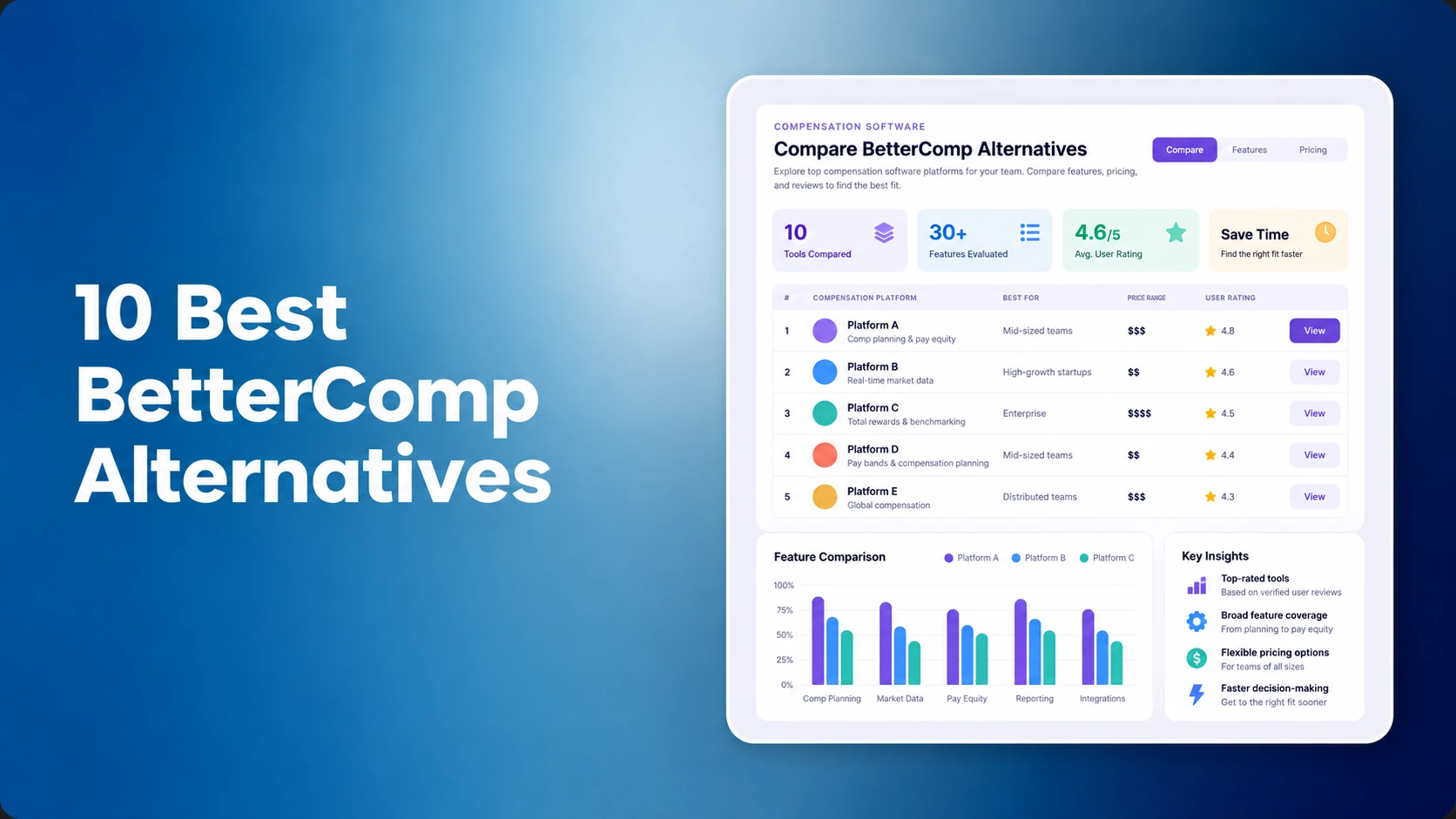

The best BetterComp alternatives and competitors depend on what your compensation team needs to change. BetterComp is primarily a market-pricing workflow: it is designed to help teams standardize survey cuts, pay markets, pricing policies, job matching, percentiles, adjustments, ranges, and large-scale repricing. A useful alternatives comparison therefore should not treat every compensation platform as a direct substitute.
For 2026, a practical shortlist includes CompBldr, Salary.com CompAnalyst Max, Payscale Ascent, Pave, Ravio, Compa, OpenComp, Figures, Mercer MarketPricer, and Compport. Some are closest to BetterComp for multi-source market pricing; others are stronger when the buying problem is fresh employer-connected data, salary structures, planning, or broader compensation execution.
Research method: current product claims were rechecked against first-party vendor documentation on October 7, 2026. This order is an editorial buyer-fit framework, not an independent product score. Pricing, packaging, data coverage, integrations, and implementation scope can change.
Publisher disclosure: CompBldr publishes this comparison and is included in it. Buyers should apply the same proof-of-capability test to CompBldr as to every other finalist.
Quick Comparison: 10 BetterComp Alternatives for 2026
| Platform | Best fit | Primary model | Critical demo question |
|---|---|---|---|
| CompBldr | Architecture-linked multi-source governance | Survey evidence tied to jobs, ranges, planning, approvals, and reporting | Can source logic survive from match through final pay decision? |
| Salary.com CompAnalyst Max | HR-reported data plus live market intelligence | HR-reported benchmarks, real-time market signals, pricing, and salary structures | Which Max capabilities and modules are required for the full workflow? |
| Payscale Ascent | Current compensation intelligence across broader pay workflows | Market intelligence, benchmarking workflows, job management, and planning context | How are difficult jobs, source context, and reviewer judgment handled in production? |
| Pave | Employer-connected salary and equity benchmarks | Persistent HRIS, ATS, and equity-system data connections | Is coverage deep enough for difficult roles and locations? |
| Ravio | International employer-connected benchmarking | HRIS-connected salary, variable, equity, and benefits data | What is the confidence for your exact roles, levels, and geographies? |
| Compa | Enterprise live market signals | Continuously normalized employee, offer, and pay-event market intelligence | Which data products, peer groups, and integrations are included? |
| OpenComp | Lean benchmark-to-strategy workflows | Global comp data, benchmarking, pay strategy, ranges, and cycles | How are third-party sources and custom assumptions handled? |
| Figures | International benchmarking tied to pay workflows | HRIS-connected benchmarks, bands, reviews, and pay equity | Which data is native versus optional or separately licensed? |
| Mercer MarketPricer | Survey-centric global job pricing | Self-service job pricing using Mercer global pay data | Which surveys, jobs, markets, and licenses are required? |
| Compport | Configurable compensation execution | Merit, bonus, LTI, incentives, pay equity, and total rewards | How does market data enter and remain traceable? |
Use this table as a screening aid, not as a substitute for a controlled demo. The same platform can look very different depending on the jobs, geographies, survey sources, governance requirements, modules, and implementation scope you need.
What BetterComp Does Well
BetterComp's current market-pricing positioning centers on turning compensation policy into repeatable pricing operations. Its workflow includes Pricing Policies, PayMarkets, survey-cut preferences, global and local job mapping, AI-assisted matching, custom percentiles, premiums and geographic differentials, range modeling, and mass repricing.
That makes the real replacement question narrower than “which compensation software is best?” Buyers should identify whether they are replacing BetterComp's market-pricing engine, supplementing its data model, or looking for a broader platform that carries approved market evidence into job architecture, salary structures, planning, pay equity, and reporting.
Review BetterComp Market Pricing.
How We Evaluated BetterComp Alternatives
- Market-data model: traditional surveys, customer-licensed sources, employer-connected data, proprietary data, or combinations.
- Job matching: explainability, reviewer control, confidence, and retained override history.
- Multi-source pricing: survey ingestion, cuts, aging, weighting, percentiles, pay markets, and reproducibility.
- Salary-structure handoff: whether approved references can move into ranges without losing source context.
- Workflow continuity: whether the platform connects market evidence to planning, approvals, pay equity, and reporting.
- Governance: permissions, effective dates, versions, approvals, and evidence retention.
Evidence standard for vendor claims
Product and coverage statements below are based on current vendor-owned documentation. A vendor page establishes what the supplier says its product supports; it does not independently prove implementation quality, customer outcomes, data sufficiency for your workforce, or service quality. Treat every material claim as something to reproduce in the demo with your own jobs, markets, survey sources, and approval process.
1. CompBldr: Best Fit for Architecture-Linked Multi-Source Governance
CompBldr is a strong candidate when market-pricing evidence must remain connected to the internal role structure and downstream pay decision. Its Market Benchmarking workflow links survey matching with job architecture, salary structures, reviewer controls, and versioned outputs. Approved structures can feed Compensation Planning.
Why shortlist it: teams using several compensation surveys may value the ability to preserve source context, reviewer decisions, range logic, approvals, and downstream evidence instead of rebuilding those relationships across separate files.
What to test: load the surveys your organization actually licenses, price one difficult hybrid role, change a match, create a range, move the result into planning, approve an exception, and retrieve the source and decision history later.
2. Salary.com CompAnalyst Max: Best Fit for HR-Reported Data Plus Live Market Intelligence
Salary.com's current platform combines HR-reported compensation benchmarks with real-time job-posting intelligence through its Max intelligence layer. CompAnalyst Max connects employee and market data for job pricing and salary structures, while Max also supports broader compensation workflows across the Salary.com platform.
Why shortlist it: it is relevant when the buyer wants traditional HR-reported compensation data and market-pricing workflows supplemented with more current market signals inside a broader compensation platform.
What to test: use a third-party survey and require the vendor to show matching, scope selection, aging, composite construction, adjustment, salary-structure handoff, live market context, and the retained source trail.
Review Salary.com's current compensation platform and CompAnalyst Market Pricing.
3. Payscale Ascent: Best Fit for Current Compensation Intelligence Across Broader Pay Workflows
Payscale launched Ascent on September 8, 2026, as an AI-first benchmarking platform within the Payscale Intelligence Cloud. Payscale positions Ascent around market intelligence, smart benchmarking workflows, contextual insights, and faster compensation decisions.
Why shortlist it: it is relevant when the buyer wants current benchmarking intelligence inside a broader compensation ecosystem rather than a stand-alone market-pricing tool.
What to test: because Ascent is new, use difficult jobs and ask Payscale to demonstrate the production workflow available today. Verify source context, cohort logic, matching, confidence information, reviewer judgment, downstream workflows, and the exact products required for the BetterComp workflow you are replacing.
Review Payscale's Ascent launch documentation.
4. Pave: Best Fit for Employer-Connected Salary and Equity Benchmarks
Pave's Market Data model is built on automated, persistent connections to HRIS, ATS, and equity-management systems. Pave says its data is collected continuously and updated benchmarks are published monthly. Its current Market Data Pro coverage spans 55+ countries and 90+ cities or metropolitan areas, subject to data sufficiency.
Why shortlist it: it is relevant when employer-connected cash and equity benchmarks, frequent data collection, and current market signals are more important than reproducing a traditional multi-survey pricing workflow.
What to test: ask for actual depth for your hardest jobs, levels, industries, and geographies. Determine whether each benchmark is observed or calculated and how thin-data situations are communicated.
Review Pave Market Data methodology.
5. Ravio: Best Fit for International Employer-Connected Benchmarking
Ravio uses HR-system-connected compensation data and currently reports coverage across 1,600+ companies, 50 countries, and 300+ roles. Its total-reward benchmarks cover salary, equity, variable pay, and benefits, with benchmarking connected to salary-band and compensation-analysis workflows.
Why shortlist it: it is relevant for internationally distributed organizations that want employer-connected market data and role-level benchmark context without relying only on annual surveys.
What to test: do not rely on headline company or country counts. Request benchmark-confidence details for the exact roles, levels, markets, and locations that drive your compensation decisions.
Review Ravio Compensation Benchmarking.
6. Compa: Best Fit for Enterprise Live Market Signals
Compa focuses on continuously collected and normalized compensation intelligence across market events such as offers, job changes, and pay adjustments. In March 2026, Compa announced that its live data network was available directly inside Workday HCM.
Why shortlist it: it is relevant for larger compensation organizations that want live market signals embedded closer to enterprise pay decisions.
What to test: verify peer depth, cohort controls, role and level coverage, and the exact data products required. Then test how those signals enter your market-pricing and governance process.
Review Compa's Workday HCM announcement.
7. OpenComp: Best Fit for Lean Teams Connecting Benchmarks to Pay Strategy
OpenComp organizes its offering around Comp Benchmarking, Comp Strategy, and Comp Cycles, connecting global compensation data with benchmarking, pay strategy, salary ranges, offers, total rewards, merit, and bonus workflows.
Why shortlist it: it can suit lean People or compensation teams that want a direct path from benchmark data into recurring pay decisions without assembling several separate point tools.
What to test: use difficult roles and ask how third-party sources, custom market assumptions, ranges, and planning decisions are handled. Confirm which capabilities are included in the proposed package.
Review OpenComp product bundles.
8. Figures: Best Fit for International Benchmarking Connected to Bands and Reviews
Figures connects compensation benchmarking with salary bands, compensation reviews, analytics, pay equity, and broader pay-transparency workflows. It is relevant when the buyer wants benchmarking and recurring pay operations close together.
Why shortlist it: it can fit internationally distributed teams, particularly in Europe, that want benchmark data connected closely to bands, reviews, and pay-equity work.
What to test: validate role-level coverage in the countries and industries that matter, and distinguish native benchmark data from optional or separately licensed sources.
Review Figures' salary benchmarking approach.
9. Mercer MarketPricer: Best Fit for Survey-Centric Global Programs
Mercer MarketPricer is a self-service job-pricing tool that gives compensation teams access to Mercer global pay data by job. Mercer positions it for benchmarking remuneration for specific jobs within defined markets, alongside its broader compensation survey ecosystem.
Why shortlist it: it is relevant for organizations whose compensation program is anchored in Mercer data and that want structured, survey-centric job pricing.
What to test: confirm which Mercer surveys, jobs, markets, participant rules, and licenses are required. Then identify what separate workflow is needed for internal job architecture, salary structures, planning, approvals, or reporting.
Review Mercer Market Pricer information.
10. Compport: Best Fit for Configurable Global Compensation Execution
Compport's current platform spans merit cycles, bonus planning, pay equity, long-term incentives, sales incentives, total rewards statements, candidate offers, and related compensation-planning workflows.
Why shortlist it: it is relevant when compensation execution complexity is the primary problem and the team wants several rewards processes managed in one configurable environment.
What to test: separate market-data capability from compensation execution. Ask exactly how external survey data is sourced, loaded, refreshed, matched, and preserved after it enters planning.
Review Compport's compensation solutions.
When BetterComp May Still Be the Right Choice
BetterComp may remain the right fit when the team's central problem is repeatable multi-survey market pricing and its Pricing Policies, PayMarkets, matching, survey-cut logic, range modeling, and repricing workflow align with the operating model.
A replacement or supplement is more defensible when a specific requirement remains unresolved: data-source fit, employer-connected market signals, deeper architecture linkage, downstream planning continuity, governance, implementation model, or total operating cost.
Use the Same Demo Scenario for Every BetterComp Alternative
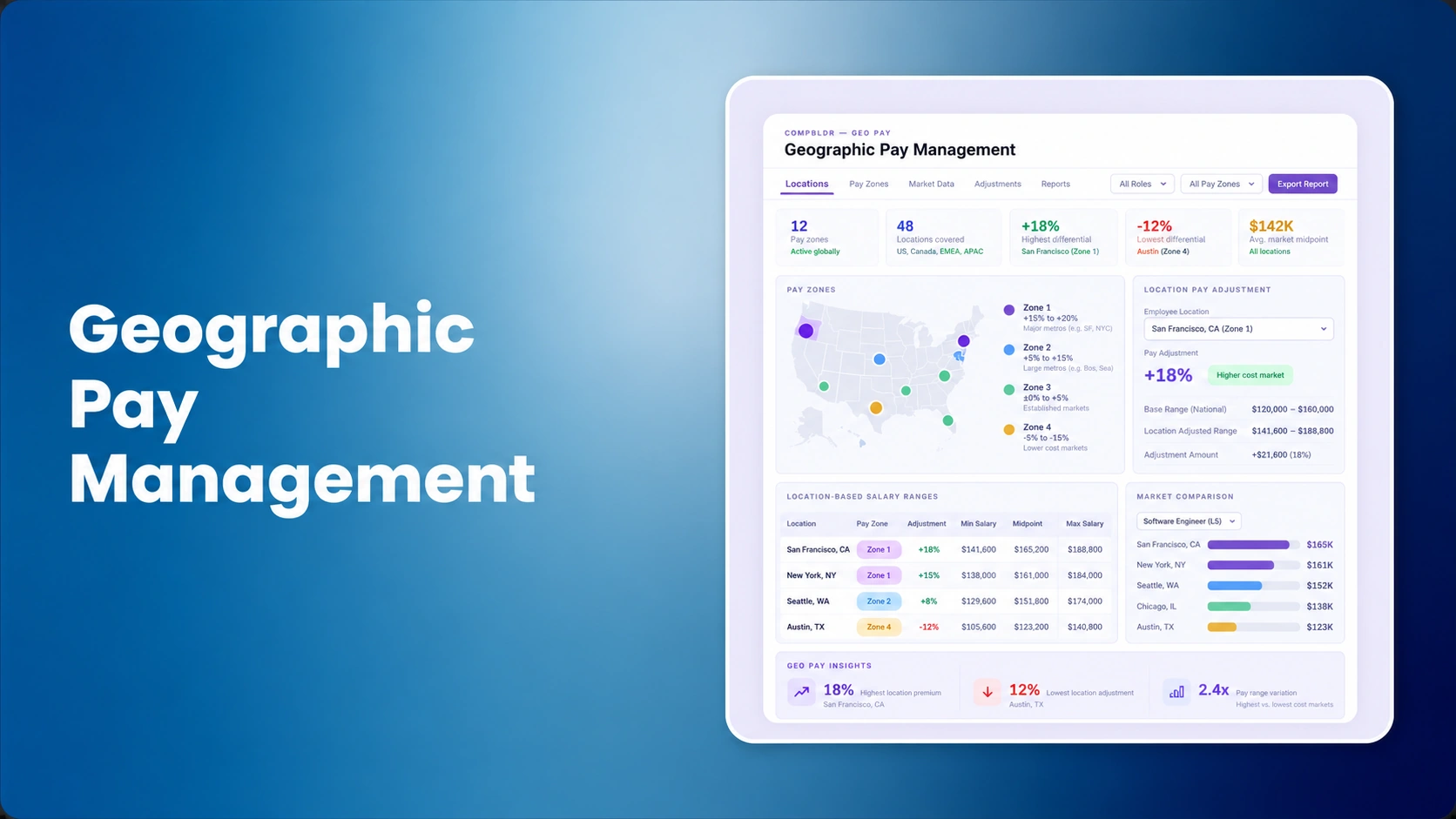
- Price one difficult hybrid role in three important geographies.
- Show the source, effective date, sample or confidence context, job level, and pay components.
- Explain what drove the match and what a reviewer can change.
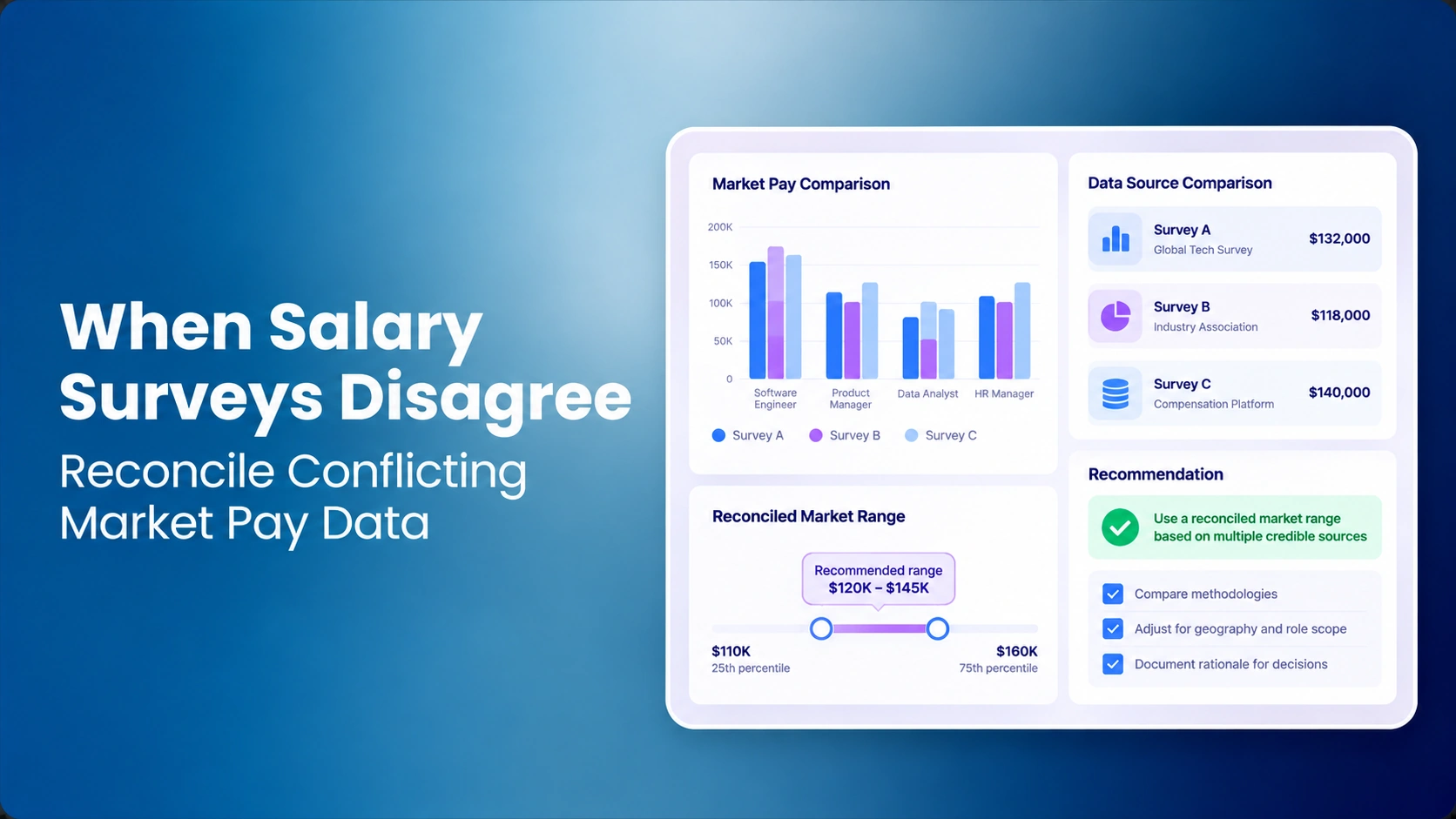
- Add a second market source and show how conflicting evidence is handled.
- Apply the organization's pricing policy, target percentile, and geographic logic.
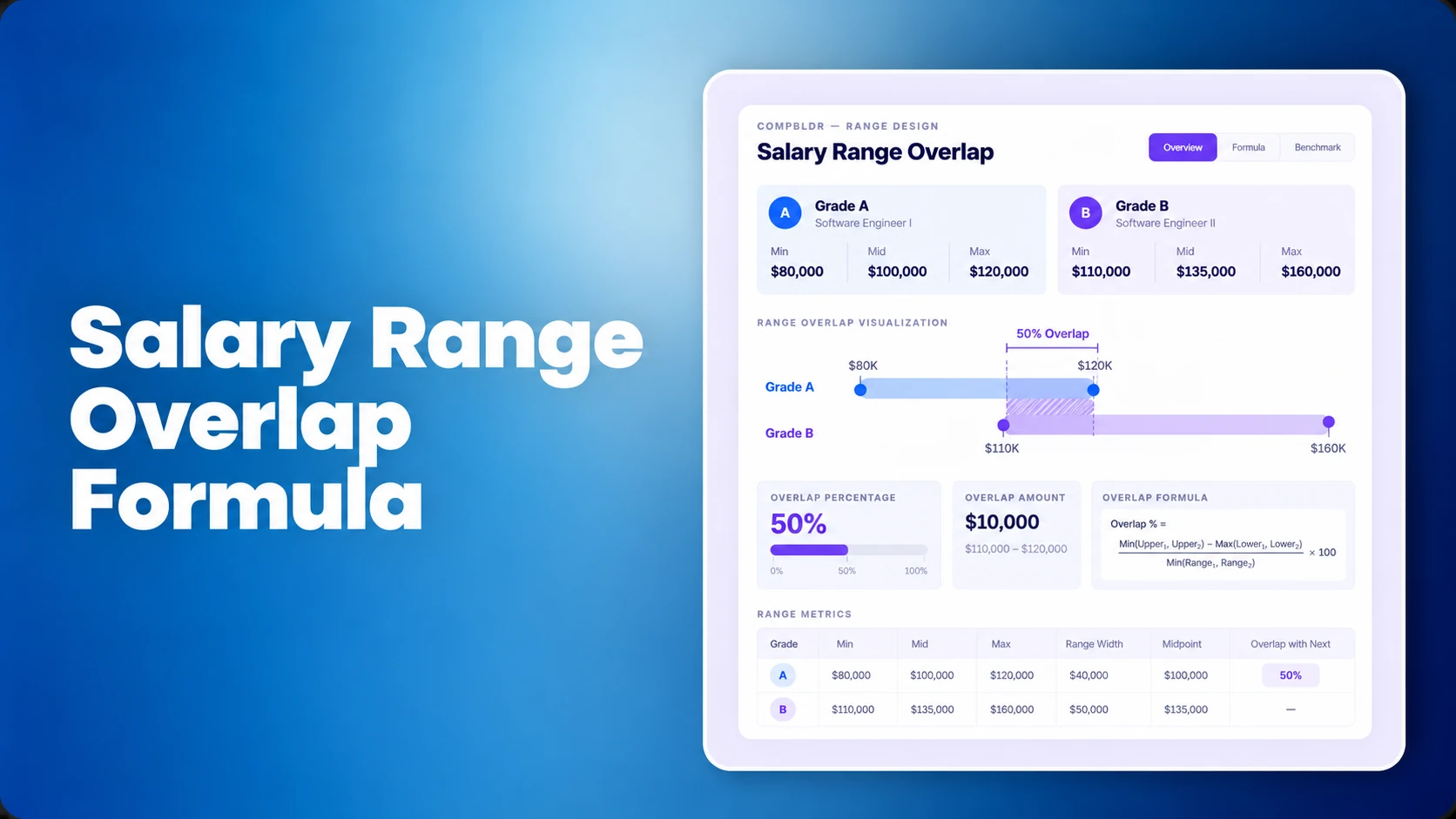
- Create or update a salary range.
- Move the approved result into a merit or salary-review decision.
- Route an out-of-guideline recommendation through approval.
- Retrieve the source, override, approval, and version history needed to reproduce the decision later.
How to Choose the Right BetterComp Alternative
Define the capability gap
Write the buying problem in one sentence. Replacing multi-survey market pricing is different from replacing benchmark data, salary structures, compensation planning, or the full compensation operating model.
Choose the authoritative data model
Decide whether customer-licensed salary surveys, employer-connected benchmarks, vendor-provided data, or a combination should drive decisions. For methodology, see compensation benchmarking vs. market pricing.
Require explainable matching and policy logic
Ask which inputs drive a match, which survey cuts and policies affect the result, what a practitioner can override, and what evidence remains after the override. Fast automation is weak governance if the decision cannot be reproduced.
Trace the result downstream
Require the approved market reference to move into salary structures, planning, approvals, and compensation reporting without uncontrolled rekeying.
Compare total operating cost
Include software, survey licenses, implementation, integrations, services, administrator time, training, and annual maintenance. Compare written proposals for the same defined workflow.
Limitations of This Comparison
This guide relies primarily on current vendor documentation and public product pages. Those sources establish what suppliers say their products support; they do not independently prove implementation quality, customer outcomes, data sufficiency for a specific workforce, or service quality. Coverage, packaging, and pricing remain buyer-specific.
Which BetterComp Alternative Should You Shortlist?
If architecture-linked multi-source governance is central, include CompBldr. If HR-reported data plus live market intelligence matters, evaluate Salary.com CompAnalyst Max. For current compensation intelligence inside the Payscale ecosystem, test Payscale Ascent. For employer-connected cash and equity benchmarks, evaluate Pave and Ravio. For enterprise live market signals, consider Compa. For benchmark-to-strategy workflows, test OpenComp and Figures. For Mercer-centric survey programs, evaluate MarketPricer. For complex compensation execution, consider Compport.
Then put BetterComp through the same scenario. The evidence may support switching, supplementing BetterComp with another data or workflow layer, or keeping the current stack.


.svg)

.svg)
.svg)

