

.svg)





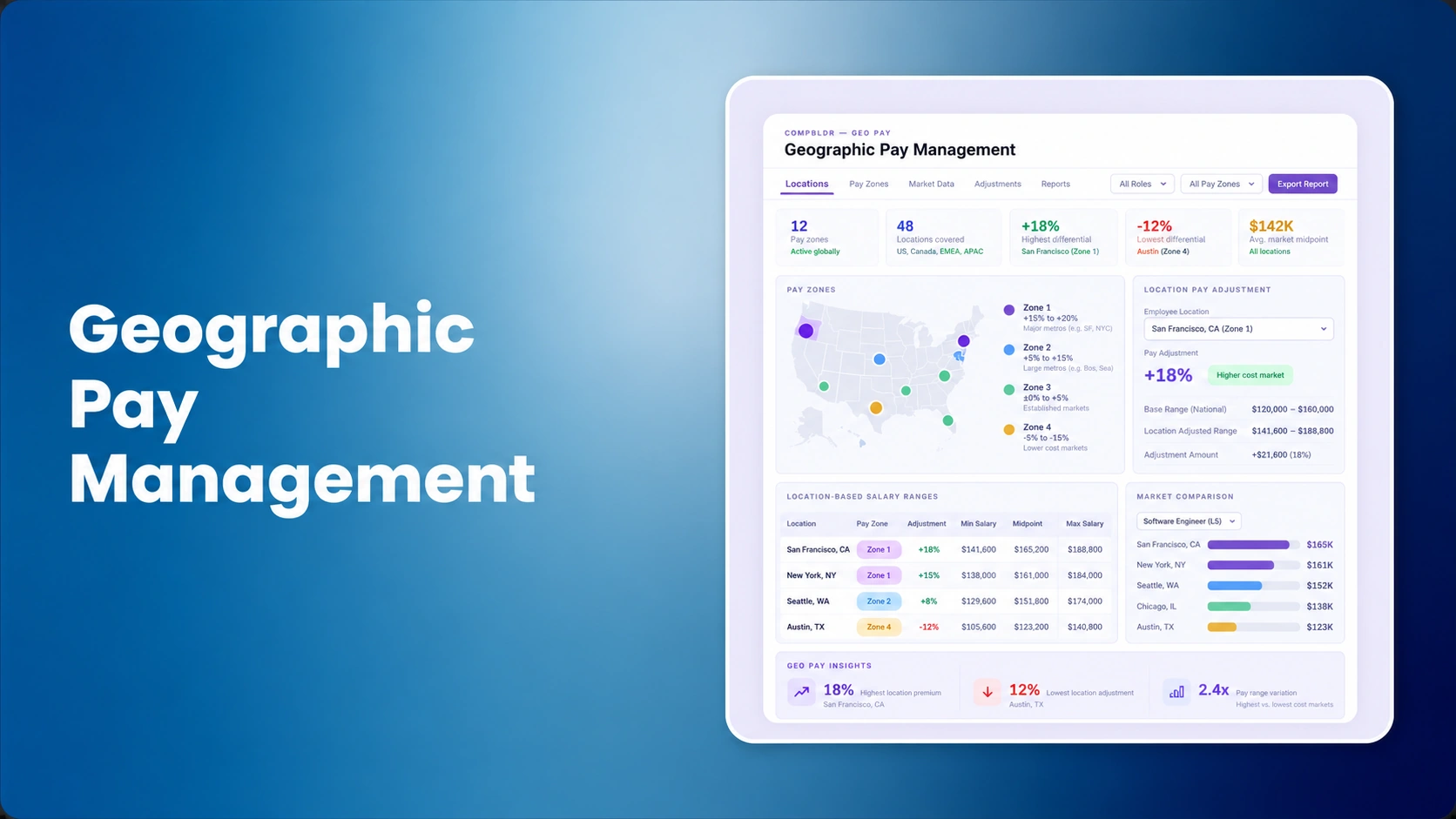

Geographic pay becomes difficult when a company tries to answer a policy question with a single location factor. A remote engineer, a warehouse supervisor, and a field salesperson may all live in the same city but compete in different labor markets. The right model depends on where the work is performed, where talent is recruited, how location-sensitive the role is, and how the company wants to balance simplicity with precision.
Mercer's current geographic-pay research argues for more precise segmentation rather than one universal differential. Payscale's 2026 Compensation Best Practices Report also shows several active methods, including a headquarters or national baseline, pay zones, ZIP-based adjustments, and other location models. The operational question is not which model looks most sophisticated. It is which model the organization can apply consistently.
Four Common Geographic Pay Models
| Model | How it works | Best fit | Main governance risk |
|---|---|---|---|
| National range | One salary range regardless of employee location | National talent markets and location-agnostic roles | Can overpay lower-pressure markets or underpay high-pressure ones |
| Headquarters-based range | Employees use the primary office market | Office-centered employers with limited geographic distribution | Becomes harder to defend as remote hiring expands |
| Geographic zones | Locations are grouped into a small number of pay tiers | Distributed workforces that need manageable administration | Boundary effects and stale zone assignments |
| Local-market ranges | Ranges are built by city, metro, or local labor market | Location-sensitive or frontline roles | High maintenance and more complex communication |
Start With the Talent Market, Not the Employee's Home Address
A home address is an input, not the pay philosophy. Compensation needs to define the relevant labor market for each role. A retail employee may compete locally. A specialized engineering role may compete nationally. An executive role may draw from a broader market still.
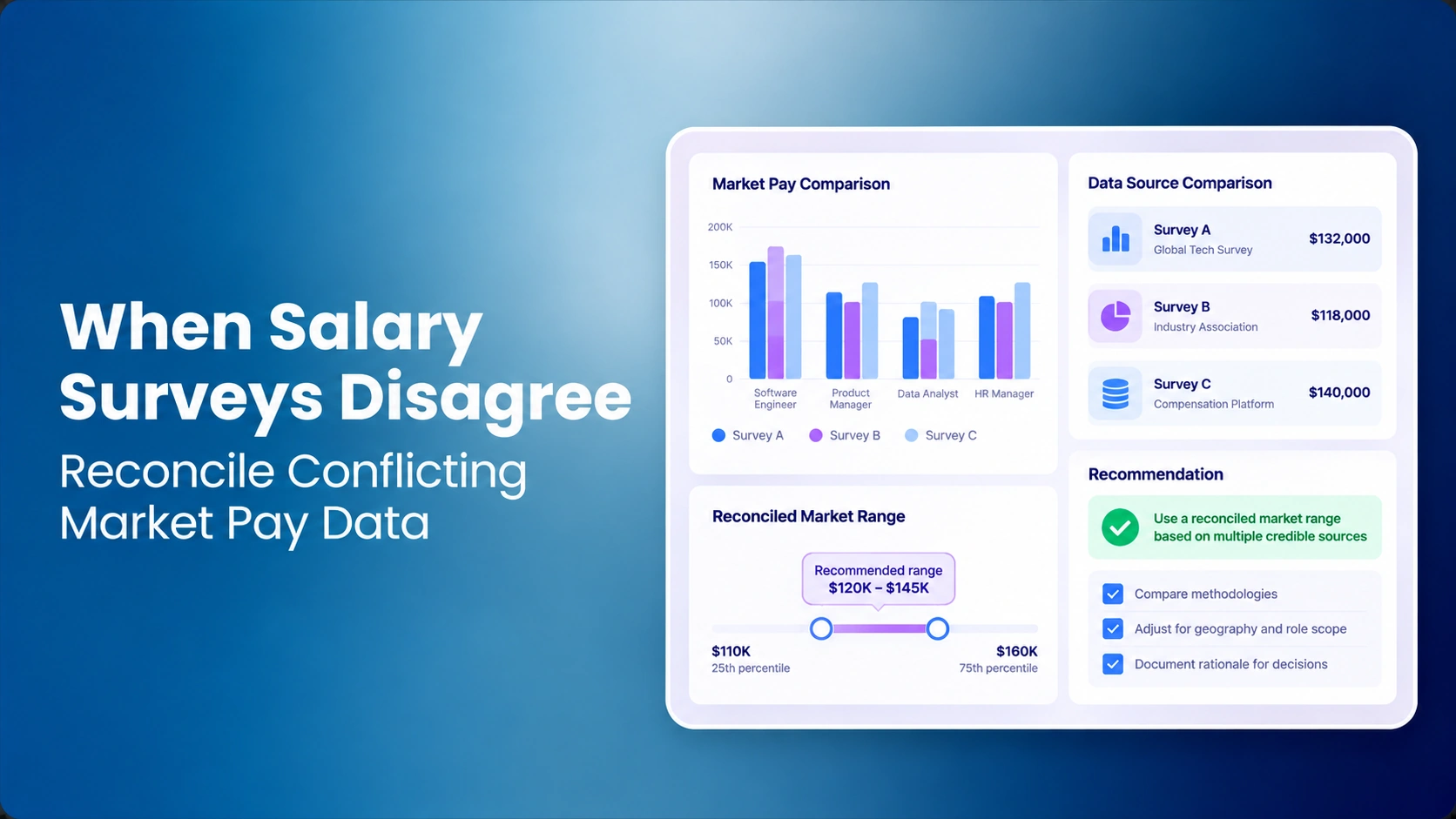
Use Market Benchmarking to establish the job, level, geography, and market cut being used. The market pricing methodology explains why geography should be documented alongside the job match and pay element rather than added as an afterthought.
When the evidence is mixed, the benchmarking evaluation guide can help separate a weak location signal from a defensible market reference.
Cost of Labor and Cost of Living Are Different Questions
Cost of living reflects what goods and services cost in a location. Cost of labor reflects what employers pay for work in that labor market. They can move differently.
Mercer's geographic-pay research identifies local labor competition, employment dynamics, regulation, and location desirability as separate drivers. A high-cost city does not automatically require the same premium for every job family.
The function-level compensation strategy article is useful here because geographic sensitivity can differ by function just as market position can.
Keep One Job Architecture Even When Ranges Differ by Location
Geography should not change the definition of the job. Keep the role in the same Job Architecture and use the same job leveling framework. A P4 software engineer should not become P5 because the employee moves to San Francisco.
If responsibilities actually change, use Job Evaluation. If only the relevant labor market changes, update the market reference or range assignment.
Separate Job Value From Geographic Market Pressure
Use CompBldr Market Benchmarking to keep the job and level consistent, then apply the geographic market policy appropriate to each role and location.
How to Build Geographic Pay Zones
First define the jobs that genuinely compete in different labor markets. Select comparable market data cuts by job family and level, establish a reference midpoint, and calculate each location's difference from that reference. Group locations only where the evidence supports similar pricing; avoid drawing boundaries based solely on ZIP codes or cost-of-living indexes.
Document the zone-to-range mapping, owner, market data vintage, effective date, and exception process. For example, with a hypothetical $100,000 reference midpoint, an approved zone factor of 1.10 implies a $110,000 midpoint while 0.95 implies $95,000; these are illustrative calculations, not recommended market differentials. Validate the resulting ranges against recruitment outcomes and internal equity before implementation.
A practical zone model starts with one reference market and groups locations by meaningful labor-market differences. The exact number of zones should reflect data quality and administrative capacity, not a desire to look sophisticated.
What Happens When an Employee Moves?
The hardest geographic-pay questions usually appear after the policy is written. An employee moves from a high-pay zone to a lower-pay zone. Do you reduce pay, freeze pay, protect the existing salary, or apply the new range only to future decisions?
There is no universal answer. The policy should define treatment before the case happens. Review the employee's position using compa-ratio or another approved metric, then assess internal relationships in Compensation Analytics.
If a move creates a salary above the new range maximum, the situation may require red-circle treatment. If it creates pay below minimum, a structural correction may be needed. Do not invent employee treatment from one relocation request.
Geographic Pay Decision Matrix
| Scenario | Question to answer | Likely policy path | Evidence |
|---|---|---|---|
| Remote employee moves to a lower-pay zone | Does policy change salary on relocation or only future range assignment? | Apply the written relocation rule and effective date | Current salary, old/new zones, policy, internal comparators |
| Company hires nationally for a scarce technical role | Is talent competition truly national? | National or broad-zone range may fit | Recruiting market, benchmark geography, role scarcity |
| Frontline role exists in 20 cities | How local is the labor market? | Local ranges or more granular zones | Local wage data, hiring radius, turnover, regulation |
| Hybrid employee lives far from the assigned office | Is pay based on work location, home location, or talent market? | Follow one declared policy | Work arrangement, designated location, policy |
| Employee is above new zone maximum after a policy change | Will base pay be protected? | Red-circle or transition treatment | Range history, effective date, employee communication plan |
Do Not Let Geographic Differentials Hide Weak Salary Structures
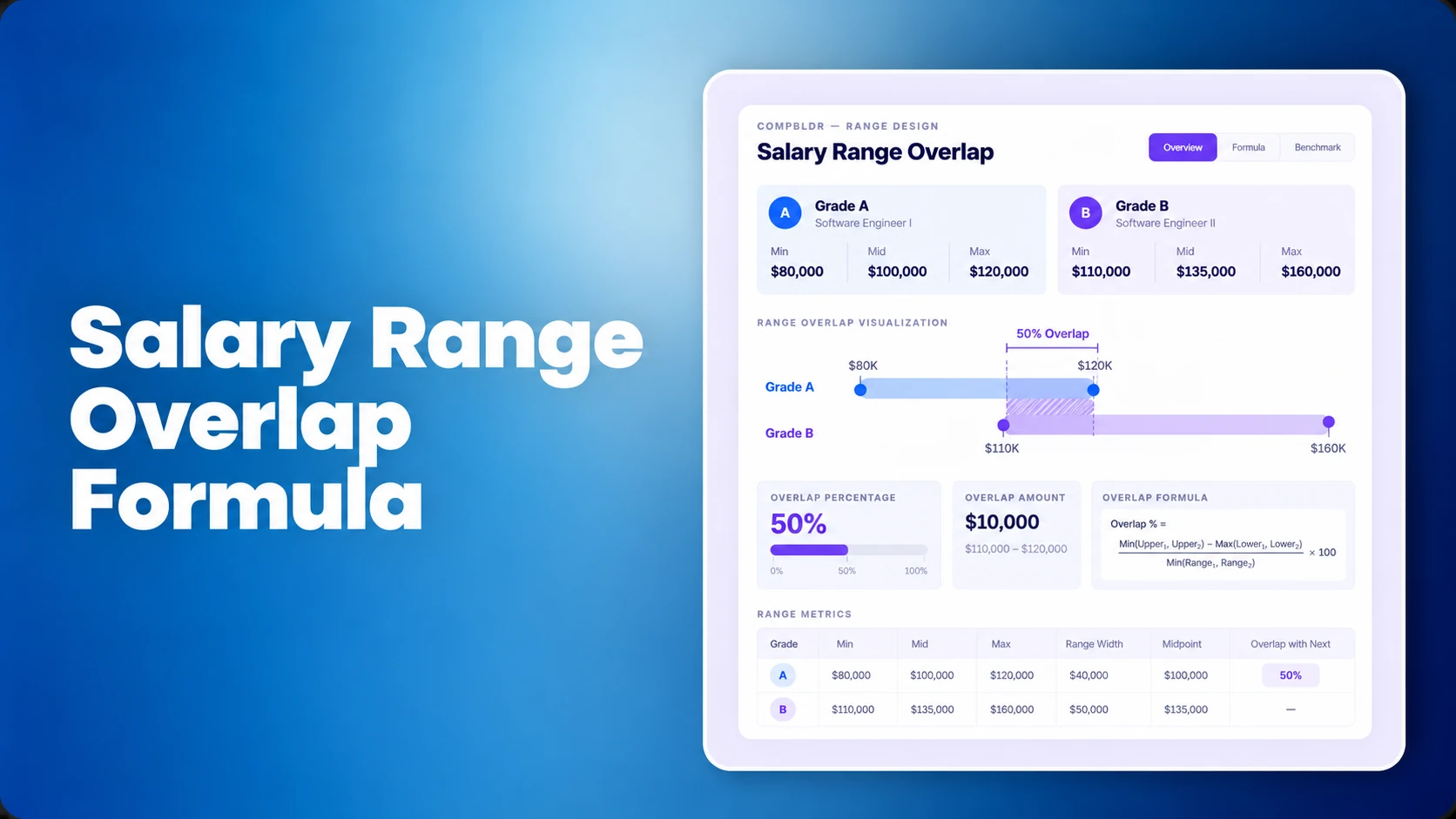
If the underlying range is stale, adding a location factor will not fix it. Review the range width, midpoint, market position, and job match first. The salary range width guide and salary range definition provide the structural checks.
If one location repeatedly produces hiring exceptions, investigate whether the geo policy, market source, or actual talent market is wrong. The offer governance framework can help separate one candidate exception from a systemic market issue.
Model Internal Equity Across Locations
Geographic differences can be legitimate, but they still need to be explainable. Use the pay equity audit process to test whether location, job, level, tenure, performance, and other legitimate factors explain observed pay differences.
A location policy should also be reviewed for pay compression. A new hire in a high-pay zone may approach the pay of a more senior employee in a lower-pay zone. That may be explainable, but managers need consistent talking points.
Connect Geographic Policy to Planning and Recruiting
Use Compensation Planning so annual increases, promotions, market adjustments, and relocation actions reference the correct current range. Use Integrations so location and job changes from the HRIS can be reflected in the compensation workflow.
The market adjustment versus merit guide is important here. A geographic adjustment is not the same thing as merit, and the action type should remain visible in the decision history.
Legal note: Jurisdiction-specific wage, pay-transparency, and employment requirements can affect geographic pay design and relocation treatment. Review applicable requirements with qualified counsel before implementing location-based pay changes.
Failure Signals in Geographic Pay Programs
Track repeated offer exceptions in the same zone, out-of-range employees after relocation, unexplained pay gaps among comparable employees, mismatches between HRIS location and assigned pay zone, and managers using unofficial differentials. Each signal needs a named owner, documented investigation, and remediation decision—not an automatic salary change.
Review exceptions by job family and market, not just companywide totals. A high exception rate for one scarce occupation may indicate that the relevant recruiting market differs from the general metropolitan average.
What Changes by Company Maturity?
Smaller employer
Two or three zones may be easier to govern than dozens of local ranges. Focus on clarity, coverage, and consistent relocation treatment.
Mid-sized distributed employer
Segment by job sensitivity and formalize relocation, hiring, and exception rules. Monitor employee movement and range utilization.
Large global employer
Country, currency, regulation, local labor markets, and internal mobility make one global zone model unrealistic. Use a common architecture and governance layer with local structures beneath it.
Illustrative Example: One Remote Engineer, One Local Operations Role
The following scenario is illustrative and uses hypothetical values or events to show the decision process.
Consider two employees who both move from Chicago to Austin. The first is a senior software engineer hired into a national remote talent market. The second is an operations supervisor who works at a specific facility and is recruited locally.
If the company uses a national range for remote engineering, the engineer's move may not change the salary range at all. If the operations role uses local-market ranges, the supervisor may move to a different geographic structure. The employees share the same relocation, but the compensation response differs because the relevant labor markets differ.
This is why geographic pay should be assigned through the job and policy, not through an employee address alone. The organization should be able to explain the talent-market logic before discussing individual pay treatment.
Set a Review Cadence for Zones and Differentials
Geographic policies become stale when locations are created once and never revisited. Define when the company reviews zone assignments, location differentials, and the employee populations affected by them.
Fast-changing or high-growth markets may need more frequent monitoring than stable locations. The review should ask whether the original labor-market relationship still holds, whether recruiting exceptions are increasing, and whether employee movement is creating unexpected compression or range-position patterns.
Use Compensation Reporting to preserve when a geographic structure changed, which employees were affected, and which decisions were made under each version.
Manager Communication Is Part of the Policy
Managers need a clear answer to three questions: why the employee is assigned to this range, what happens if location changes, and how location interacts with future salary growth. If those answers depend on who asks, the policy is not operational yet.
Give managers language that distinguishes job level, market location, current salary, and future progression. That is more useful than simply showing a range and expecting the manager to explain the rest.
Operationalize Geographic Pay Without Turning It Into a Spreadsheet Maze
See how CompBldr connects market benchmarking, salary ranges, employee analytics, planning, and HRIS data so geographic pay decisions stay consistent as people and roles move.
Book a DemoSources and Further Reading
- Mercer: The Geo Pay Remix — geographic pay strategy and role-specific labor-market considerations.
- Payscale: Compensation Best Practices Report — approaches to geographic pay and compensation practice.
- CompBldr: Market Pricing in Compensation — matching jobs and market data by geography.


.svg)

.svg)
.svg)

