




Select university staff job evaluation software that stores position descriptions, evaluates scope using consistent factors, supports HR reviewer overrides, preserves approved grade decisions and connects non-faculty staff grades with salary ranges. Test two similar titles with different responsibilities and an effective-dated reclassification.
A university department may call one employee Program Manager while a similar title in another department oversees a larger budget, supervises staff and has institution-wide responsibility. Compensation software must help HR compare the actual work, apply approved grade criteria and retain the decision. A title lookup cannot substitute for a defensible staff classification review.
Four requirements for university staff job evaluation software
The University of Colorado Boulder's published staff compensation framework describes job-family leveling, responsibility, autonomy, supervisory scope and HR-approved compensation codes. It provides a practical institutional example, not a mandate for other universities. CU Boulder’s university staff compensation roles and oversight.
Can roles from different departments be compared fairly?
An Academic Program Coordinator, Student Services Manager and Research Support Administrator may differ by complexity, supervision and institutional impact. Maintain common job architecture but allow function-specific roles. The distinction between job level and grade matters when one institution uses similar titles across schools.
Vendor test: Give the vendor two positions named Program Manager and ask for responsibility-based comparison rather than a shared default grade.
Does job evaluation have transparent criteria?
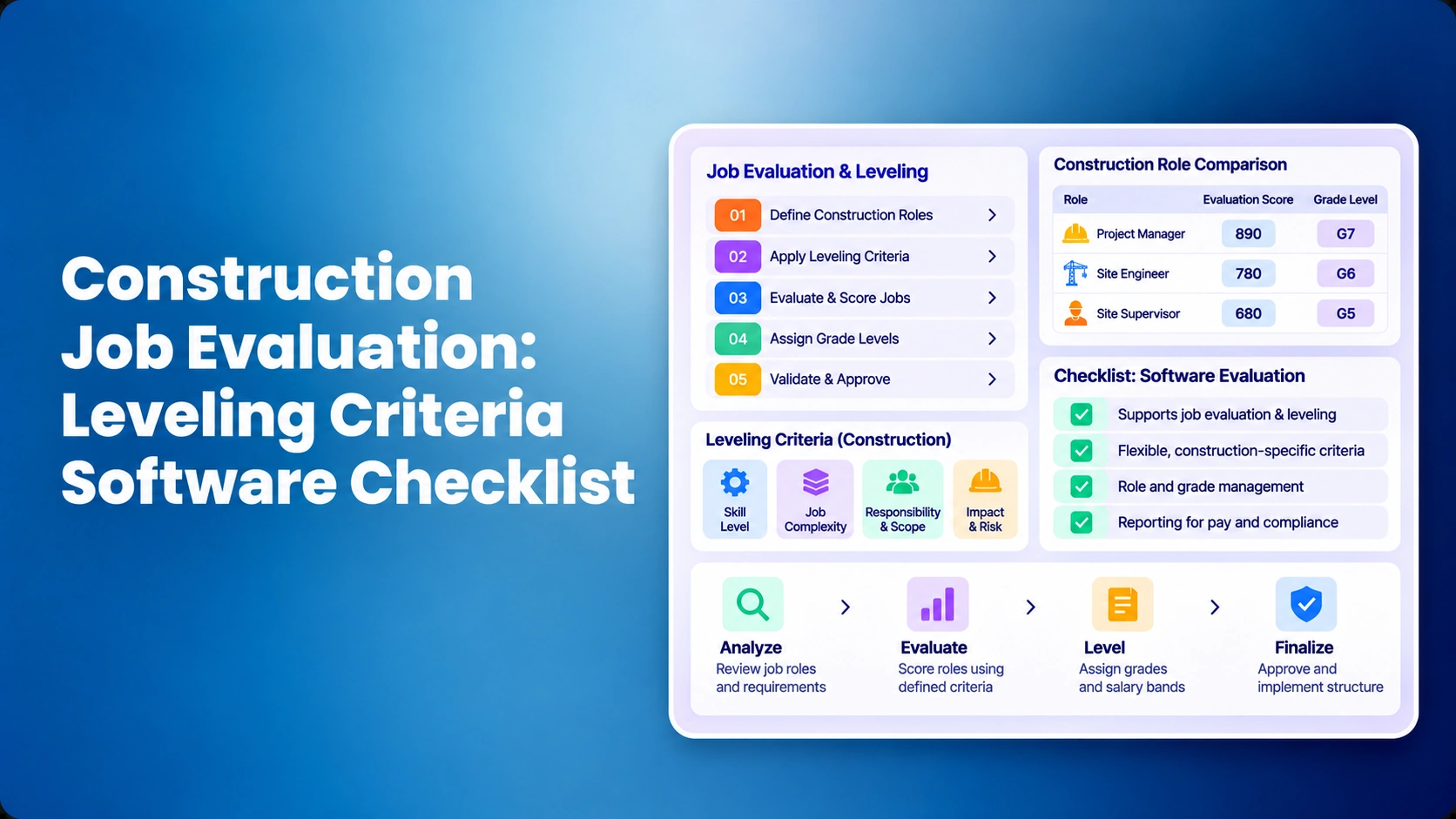
A university buyer needs to explain why positions moved into different grades after restructuring. Test job evaluation factors and the governance principles in evaluation methods compared. A reviewer should be able to inspect job description evidence, modify a proposed classification and retain the reason. Opaque AI rankings are not an acceptable substitute for an institutional policy.
Vendor test: Have a departmental HR liaison challenge the factor rating and review the complete change history.
How do grades connect to external staff labor markets?
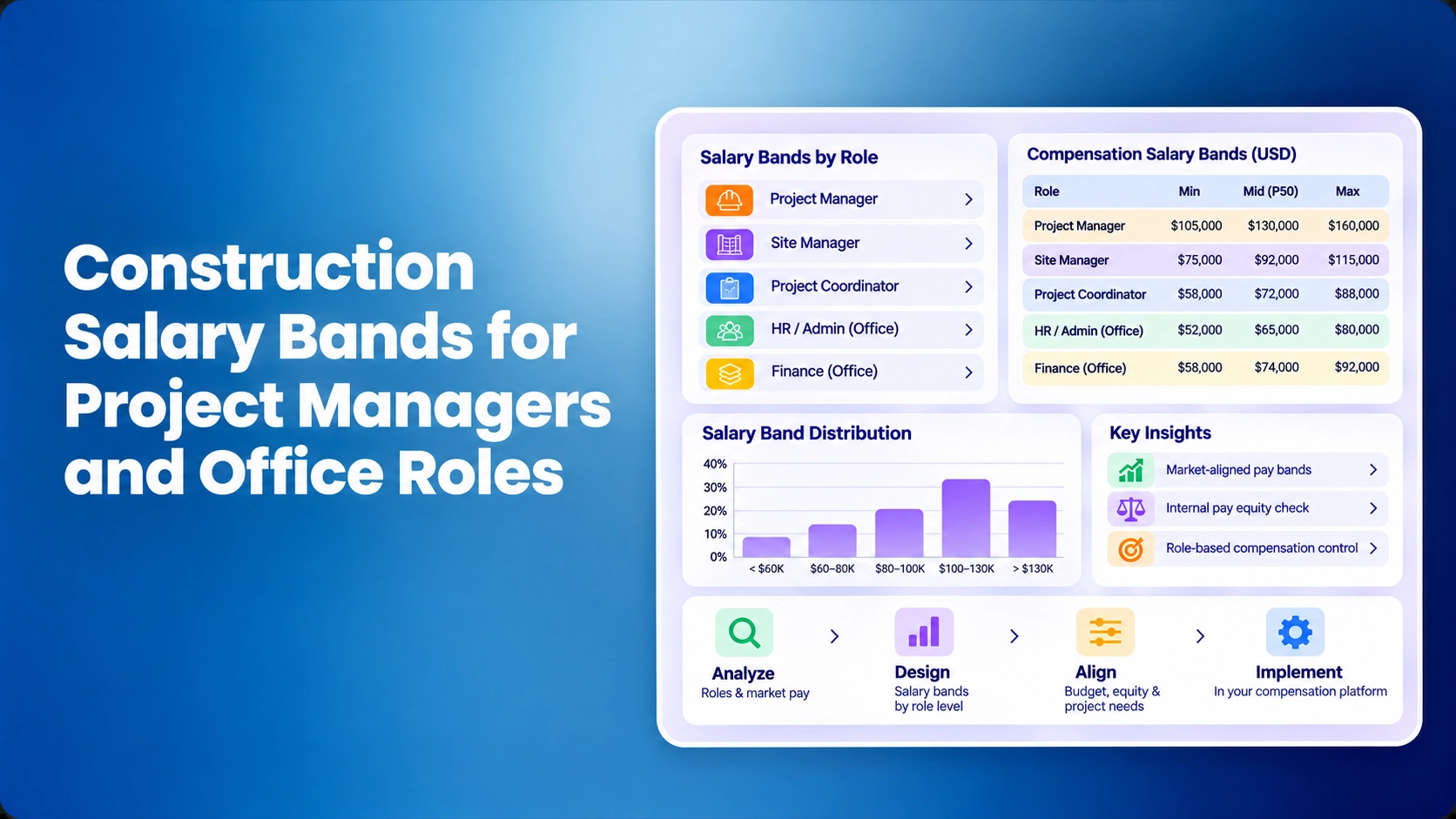
Professionals in admissions, facilities, finance or IT may need different source surveys and peer definitions. Use relevant market benchmarking and the salary survey matching process without treating salary median as internal job value. Examine where a proposed role lacks credible peer data.
Vendor test: Ask for one role priced with strong survey coverage and another with a weak comparison; show how uncertainty is recorded.
Can campus HR govern changes across schools?
Position classifications can change after reorganizations or promotions. The platform should retain prior role definitions and connect grade approvals to salary structures and review reports. Changes should not silently overwrite the pay structure used by an earlier employee decision.
Vendor test: Test an approved reclassification with an effective date and a different manager's later access.
What position evidence should a campus evaluation committee collect?
A university may have an administrative coordinator in Student Affairs, a program administrator in a research center, and a senior departmental assistant supporting a dean. Titles and local reporting lines may look alike even though one position manages a restricted program budget, one administers complex student cases, and another primarily schedules services. A defensible grade process begins with position evidence: independent judgment, program complexity, financial responsibility, breadth of service, supervisory duties, and institutional impact. Do not assume the job with the loudest department advocate deserves the highest grade.
Use one position description template for every school and administrative unit. Request a short statement of the position's purpose, five essential accountabilities, decisions made independently, decisions escalated, and approximate scope of resources or personnel overseen. The department supplies operational facts; central HR validates consistency; an evaluation committee applies the approved factor framework. Employees' degrees, tenure and individual performance should be reviewed only where they are genuinely relevant to the job requirements, not used as substitutes for position scope.
Use one evidence pack for every department
Campus HR should ask each department for an approved job description, position purpose, essential recurring duties, reporting relationship, decisions made independently, decisions requiring escalation, supervision and budget or service responsibilities. Record the author and effective date of the description. Compare the duties assigned to the position, not the individual employee's salary, tenure or performance.
Two positions called Program Manager may differ because one coordinates events under written policy while another supervises staff and directs multiple programs. A consistent evaluation explains which approved factor degrees those recurring responsibilities justify. Department size or budget amount alone does not prove a higher grade.
How should universities compare positions across departments?
| Position | Work evidence | Possible factor distinction | Approval question |
|---|---|---|---|
| Department coordinator | Schedules courses and maintains records under established policies | Execution of defined processes | Does the role independently interpret or only administer policy? |
| Research program administrator | Coordinates grant operations and resolves sponsor-documentation issues | Specialized judgment and financial complexity | Are grant-compliance decisions delegated to the position? |
| Student services manager | Directs staff and owns service standards across programs | People leadership and cross-unit outcomes | What staffing and resource authority is assigned? |
The rows are illustrative, not recommended university grades. The same position title can justify different outcomes if the verified work differs. Conversely, separate titles can map to one evaluated level. Ask the software to show an approved job profile and the local position instances that use it, with documented exceptions.
Calibration rule: compare each position against approved factor descriptions, test whether departments applied consistent evidence standards and retain reasons for exceptions. The internal grade describes evaluated work. An external survey percentile can inform pay policy after classification, but should not determine the grade or overwrite an earlier evaluation.
How is job evaluation different from market pricing?
Job evaluation answers what level of internal responsibility the institution assigns to a role. Market pricing answers what appropriate employers pay for comparable work. Salary range design determines the permitted pay interval under institutional policy. A survey rate should not automatically determine job worth, and a grade should not be raised merely because a department is struggling to recruit. Instead, compare the job to defined levels, then assess the market and recommend any location-specific or exceptional pay treatment through the correct authority.
For a campus position split between financial aid and IT support, require the reviewer to identify the primary purpose, recurring accountabilities and level of independent judgment. A tool that assigns a score based only on a job title or keyword frequency will misread hybrid jobs. If the committee approves a new level, retain the earlier factor assessment, the job-description version, the effective date, the reason for reclassification and the approver. This becomes particularly important after a reorganization or leadership transition.
How should HR handle disagreements about job grades?
In a realistic evaluation meeting, a dean may argue that a departmental administrator performs manager-level work, while HR believes the tasks remain within an established specialist level. Each reviewer should be able to point to a factor definition and supporting evidence. Ask the vendor to demonstrate two alternative assessments for the same position, attach reviewer comments, return a case for clarification and record the final approved result. An unexplained median score is not a substitute for a committee decision.
The institution should also define its appeal and reassessment process. What change in duties qualifies for a new review? Who can submit a request? Who may approve it? Can HR reject a request while retaining the rationale and notifying the department? The answer needs to be reflected in both policy and the practical record-keeping workflow, whether permissions sit inside the compensation platform or a connected administrative process.
Which five university roles should be tested in a pilot?
- Common role: evaluate an administrative assistant used across three academic departments and confirm equivalent work maps consistently.
- Specialized role: evaluate a research administration professional whose compliance responsibilities are not captured by the local title.
- Hybrid role: document responsibilities shared between academic advising and systems administration.
- Reclassification: process a position after its supervisory scope changed and preserve the former approved evaluation.
- Disputed role: record disagreement between HR and a unit leader, including evidence requested and the final decision.
Require exports or readable records for each case. Review how the approved level moves into salary structures, how incumbents can be assessed against the new range, and which person owns the HRIS job-code update. A grade approved in the compensation system is not automatically a payroll or employment-contract change.
Where do CUPA-HR market benchmarks fit after job evaluation?
Once HR approves an internal grade, buyers can assess external pay evidence using the right survey population. The 2025–26 CUPA-HR Professionals survey covers 409 positions, including academic affairs, IT and student affairs. The separate Staff survey covers 153 largely nonexempt office, technical, service and skilled-craft positions. These categories do not assign the university's internal grades, and published methodology is not a license to use its salary data.
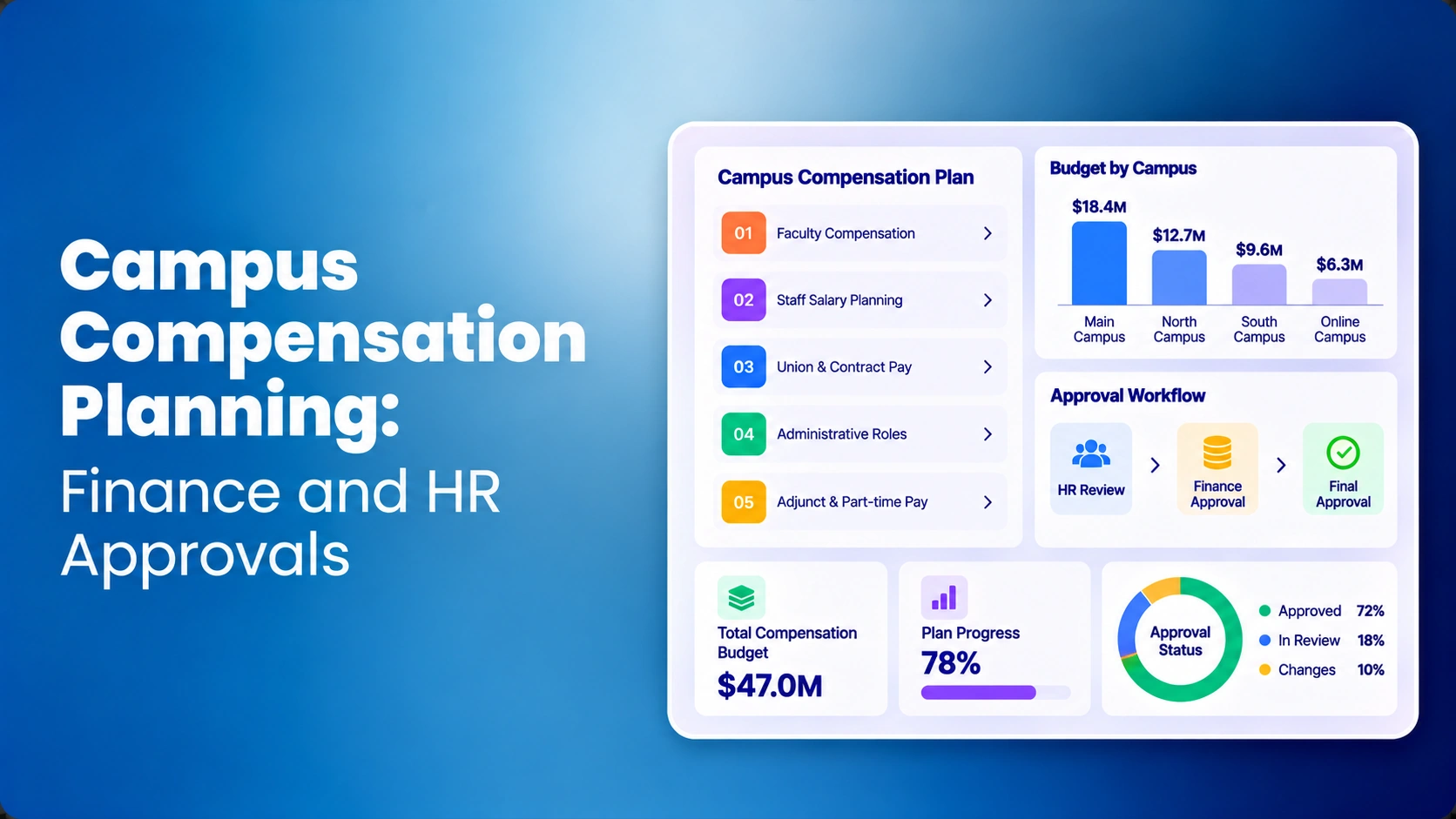
For proposed ranges and employee pay impact, consult the higher education salary-band management guide. For departmental requests and Finance approvals, see campus compensation planning. This article focuses on how a university evaluates positions and preserves consistent job-grade decisions.
What governance and access controls must be tested?
Universities may distinguish faculty, professional staff, non-exempt staff, student employees, temporary appointments and collectively bargained populations. Keep each group under its applicable policy; do not claim a single staff methodology covers them all. Restricted-access compensation data should be visible only to appropriate reviewers. Specify who can see individual pay, who can change a factor score, who can approve a grade and who can export the evaluation record. The system's permissions should be tested, not inferred from a sales presentation.
Watch for three red flags: departments maintaining their own hidden grade tables, a job description that can be changed after approval with no version history, and grade decisions that cannot be reproduced after the analyst who made them leaves. The goal is not uniform outcomes at all costs. It is a consistent process that preserves legitimate differences in the work.
Documented CompBldr functionality: CompBldr's job evaluation workflow uses JESAP®, a 15-factor point-factor methodology, and describes saved evaluator identities, timestamps, version comparisons and algorithm-based calibration for human review. These published product claims do not establish that a particular university's approval hierarchy, faculty rules, bargaining agreements or HRIS integrations are included without configuration. Verify the specific requirements in a live demonstration.
University staff job evaluation software scorecard
Use this table to compare demonstrated evidence, not untested product claims. The institution should agree which failures are unacceptable before requesting vendor demonstrations.
| Decision | Proof | Failure |
|---|---|---|
| Job catalog | Non-faculty duties, department and family | Title-only grading |
| Factors | Complexity, supervision, autonomy, impact | Opaque unreviewable score |
| Approval | HR review, rationale and prior version | Department edits final grade freely |
| Pay handoff | Range and market data connected to grade | Survey rate determines grade |
How should HR and Finance score vendor demonstrations?
Score each of the four matrix areas on a buyer-defined 0–2-point scale: 2 for a complete demonstration with saved, retrievable evidence; 1 for a documented workaround or configuration dependency; and 0 for a task not demonstrated. The maximum is 8 points. Keep evaluator observations, outputs and unresolved issues for every finalist. This is an illustrative procurement scorecard, not an independent product ranking.
Mandatory checks: reviewable factor definitions, effective-dated prior records, HR authorization, restricted reviewer access and a separate pay handoff. A high score cannot offset an unauthorized grade override or missing evaluation history.
Worked campus scenario: evaluate two Program Manager roles
Use the same fictional data with every software finalist. Program Manager A coordinates one academic office without direct reports. Program Manager B oversees several programs, supervises staff and has delegated authority over specified operational decisions. They share a title, but the university must decide their grades by examining the work rather than assigning an automatic match.
- Compare verified job evidence. Review each position description, organization chart, recurring duties and delegation limits. Map both jobs to the approved job-leveling framework. The evaluator should identify evidence supporting any difference in responsibility, supervision or complexity.
- Score and challenge the factors. Have HR and a department reviewer assess the jobs independently, then challenge one proposed supervision rating. Require the actual degree definition and supporting evidence under the point-factor methodology. Do not use a fictional universal score threshold.
- Revise and preserve the record. Change one recurring duty, resubmit the position and compare both saved evaluations. Ask the vendor to show the initial rating, disputed factor, reviewer response and evidence. Test these against the job evaluation software criteria.
- Approve and hand off the grade. Have an authorized HR user approve one decision and reject an unsupported override. Retrieve earlier descriptions, scores, approver and effective date. Verify the resulting range context and effective-dated structure history without assuming a grade proposal automatically changes payroll.
Pass criterion: a different reviewer can explain the two grade outcomes, cite the source evidence and identify the final authority. If a step depends on an outside HRIS, committee or approval system, the vendor should document that boundary instead of claiming an automatic workflow.
Evaluate University Staff Workflows
Use representative campus staff job, range and approval questions to evaluate what CompBldr supports.
Book a DemoWhat should universities verify before implementation?
Staff classifications may operate under different institutional and state rules. This article does not cover faculty salary automation, collective bargaining negotiations, tenure policy or legal classification determinations. University HR and counsel retain responsibility for institutional policy and regulatory requirements.
Require clarity about data sources, job populations, access controls, approved institutional policy, migration tests and what requires custom implementation. Ask the vendor to repeat one unfavorable test case. A promise about a feature on the roadmap is not the same as a demonstrated capability.
How does CompBldr support documented job evaluation?
CompBldr links job architecture, evaluation records, market analysis, salary structure management and reports. Test whether the institution's actual job codes, reviewer hierarchy and grade methodology can be configured within the contracted modules.
How should HR explain grade decisions to campus managers?
Even a technically sound grade review can fail when departments receive an unexplained classification change. Before approving the new architecture, define what managers can tell staff: what was evaluated, which duties supported the decision, whether pay changes follow automatically, and which route exists for requesting a review. A grade classification is not a performance rating. It describes the institution's assessment of the work, and it may remain stable even when an employee becomes substantially more proficient.
Use a hypothetical example of two similar administrative positions that receive the same grade after a central review. One incumbent has substantial service and earns more because of documented prior increases. Equal job grades do not necessarily require identical individual salaries; nevertheless, HR should examine whether resulting pay differences can be explained under the institution's policies and applicable law. Separate the classification decision from the employee-level pay analysis, and document the handoff between those workstreams.
Ask the vendor for a manager-facing report containing the position's approved family, level, review date and rationale without exposing other employees' confidential pay. Then test a reclassification request submitted six months later. The record should reference what changed in the job, not simply that a department now has additional funding. A clear communication record reduces appeals based on misunderstandings and makes the job structure more credible to university leaders. The exact permissions and report views should be demonstrated, not assumed.
Sources and methodology (reviewed November 14, 2026): CU Boulder staff compensation roles and oversight provide one institutional example, not a universal grading mandate. CUPA-HR methodology describes distinct staff and professional survey populations; CompBldr's JESAP documentation describes a 15-factor evaluation model. The two Program Manager jobs and eight-point checklist are illustrative buyer exercises, not measured campus outcomes. Verify local institutional rules and vendor implementation details.
Next step: demonstrate a disputed university staff grade
Bring one representative staff position, its current grade, a relevant market source and an exception requiring approval. Document what the system actually does and what the university team must still control manually. Agree on acceptance criteria before reviewing price.
Book a CompBldr Evaluation
Use representative campus staff job, range and approval questions to evaluate what CompBldr supports.
Book a Demo